
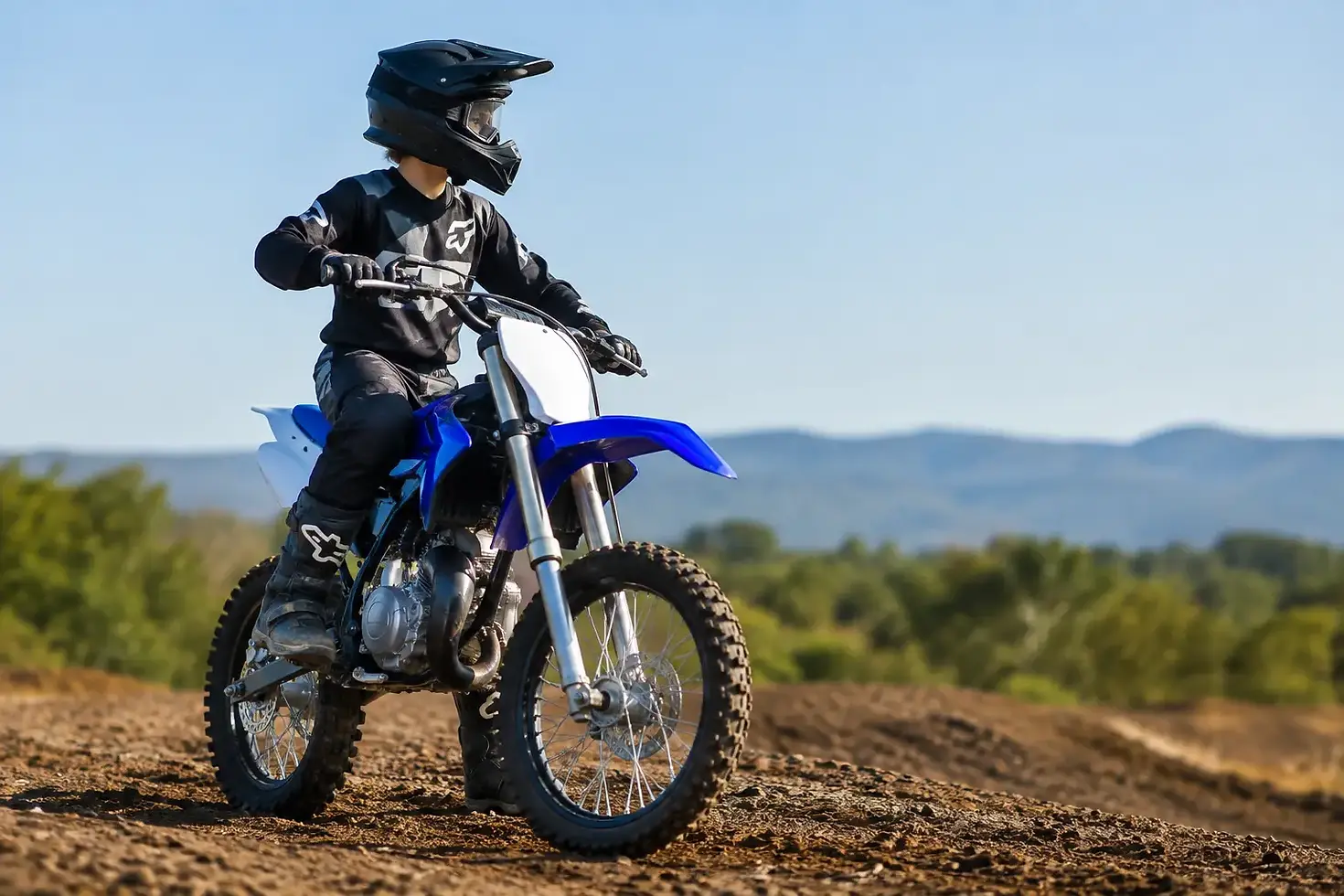
110cc Dirt Bike Review for New Motocross Riders
A 110cc dirt bike is not a scaled-down race bike that a rider will outgrow in one afternoon. For the right new rider, it is a controlled platform for learning throttle discipline, standing position, braking, turns, and track awareness without managing more power than they can use. This 110cc dirt bike review looks at where this popular beginner class performs well, where it has limits, and how to decide whether it is the right place to start.
For first-time riders around Moreno Valley and the Badlands area, the bike matters, but the setup matters just as much. A properly sized bike, protective gear, a safe riding area, and coaching can turn a first session from frustrating into productive.
What a 110cc Dirt Bike Actually Delivers
Most 110cc dirt bikes use a four-stroke engine and an automatic or semi-automatic transmission. That combination keeps the learning curve manageable. The power comes on predictably rather than all at once, which gives a beginner time to process body position, steering input, and braking.
A 110 is typically stronger than the small bikes many young children begin on, yet it is less demanding than a 125cc manual-clutch motocross bike. On a practice track, that middle ground is valuable. A rider can work through flat turns, small rollers, basic jumps, and braking drills without being pushed into high speeds before their technique is ready.
The biggest benefit is not simply lower horsepower. It is the confidence to repeat a skill. Riders improve when they can make the same corner ten times, correct one mistake at a time, and keep their energy for learning instead of recovering from a bike that feels intimidating.
110cc Dirt Bike Review: Strengths and Trade-Offs
A 110cc bike earns its reputation as a strong entry point because it is approachable. The seat height is usually lower than a full-size machine, the chassis is lighter, and the controls are less overwhelming for a new rider. Many models also have electric start, which eliminates one more obstacle between a rider and useful practice time.
Automatic shifting is another major advantage. A beginner does not need to coordinate a clutch while learning to control the throttle over uneven ground. That lets an instructor focus on the habits that have the greatest effect on safety and speed later: eyes up, elbows out, standing through rough sections, smooth braking, and correct corner entry.
There are trade-offs. A 110 does not have the suspension travel, top-end power, or high-speed stability of a larger motocross bike. An aggressive intermediate rider can quickly reach its limits on large jumps, deep whoops, steep hills, or fast outdoor tracks. It also may feel cramped for a tall or heavy adult, even if that rider is brand-new.
The bike class alone does not tell the whole story. Two riders of the same age can need different bikes based on inseam, body weight, coordination, athletic background, and comfort level. A shorter teen with no riding experience may progress faster on a 110 than on a bigger bike. A tall adult with solid balance and a willingness to learn clutch control may be better served by a larger beginner-friendly option.
Who Should Start on a 110?
A 110cc dirt bike is often a good fit for young teens, smaller adults, and first-time riders who want a realistic introduction to motocross or trail riding. It is also useful for riders returning after a long break. Starting smaller is not a step backward. It is a way to rebuild timing and control before adding speed.
It can be especially effective for riders who feel nervous about shifting or have never used a hand clutch. Removing that task does not remove the need for proper instruction. It simply puts the focus on the fundamentals first.
A 110 may not be the best long-term choice for a larger adult who intends to ride advanced tracks or compete. It may also be too small for a rider whose knees are heavily bent while seated or whose weight overloads the suspension. In those cases, a 125cc-and-up rental or a larger training bike may offer a better riding position and more room to progress.
The goal is not to choose the biggest bike a rider can physically start. The goal is to choose the smallest bike that allows proper posture, safe control, and repeated practice at a useful pace.
What to Check Before You Ride
A clean bike is not necessarily a ready bike. Before every session, check the basic mechanical items that affect control and reliability. This is particularly important with small displacement bikes, which are often used by newer riders and can take a lot of low-speed tip-overs.
Check that the front and rear brakes engage firmly and that the throttle snaps back freely when released. Look over the chain for correct tension and lubrication, and inspect the tires for damage and adequate pressure. Make sure the controls are secure, the handlebars are straight, and there are no fluid leaks around the engine or forks.
If the bike has a semi-automatic transmission, confirm the rider understands the shift pattern before moving. Practice selecting gears while stopped, then begin in an open area. A few minutes spent learning the controls can prevent a panic grab of the throttle when the bike moves.
Protective equipment is part of the bike setup. A properly fitted helmet, goggles, boots, gloves, pants, jersey, and knee protection give a beginner more than crash protection. They make it easier to stand on the pegs, grip the bike with the legs, see clearly through dust, and maintain focus through a full session.
The Skills That Make a 110 Fast Enough
On a 110, technique shows up immediately. There is not a large burst of horsepower to cover up poor cornering or late braking. That is why this class can build excellent habits when it is used with a plan.
Start with a neutral standing position: knees slightly bent, weight centered, elbows up, and eyes looking well ahead rather than at the front fender. On loose ground, let the motorcycle move beneath you instead of locking your arms. Use the legs to support your body and keep a relaxed grip on the bars.
Braking should be practiced before speed is added. Riders need to understand how the front brake provides strong stopping power while the rear brake helps settle the bike and manage low-speed control. The correct balance changes with the terrain. Hardpack, sand, downhill sections, and rutted turns all require different feel.
Cornering is where coaching can save months of trial and error. A rider needs to enter under control, look through the exit, choose a line, and apply throttle smoothly as the bike stands up. Simply riding laps builds comfort, but deliberate drills build skill.
At Dirt Bike Rentals and Training, beginner sessions can pair access to an appropriate bike with technique instruction from Pro AMA racer Dominic DeSimone. For a rider who is unsure where to begin, direct feedback on body position and track habits is more useful than trying to copy faster riders from the sidelines.
Rental First or Buy First?
For many new riders, renting before buying is the practical move. It gives you a chance to test whether the 110cc size feels natural without immediately taking on the cost of a bike, transport, maintenance equipment, and storage. It also helps answer questions that are hard to solve in a showroom: Can you comfortably reach the controls? Does the bike feel stable when standing? Are you ready for a clutch bike, or is automatic operation the smarter choice right now?
Buying makes more sense once the rider has enough seat time to know what type of riding they enjoy and what size fits. A family focused on casual property riding may prioritize simplicity and durability. A rider interested in motocross progression may prioritize suspension, parts availability, and the next realistic step up in engine class.
There is no prize for moving up too early. A rider who can brake late under control, carry corner speed, ride standing through rough terrain, and make smooth laps on a 110 has built skills that transfer directly to a bigger bike. Start with the machine you can control, then let consistent technique determine when it is time for more power.


Comments