
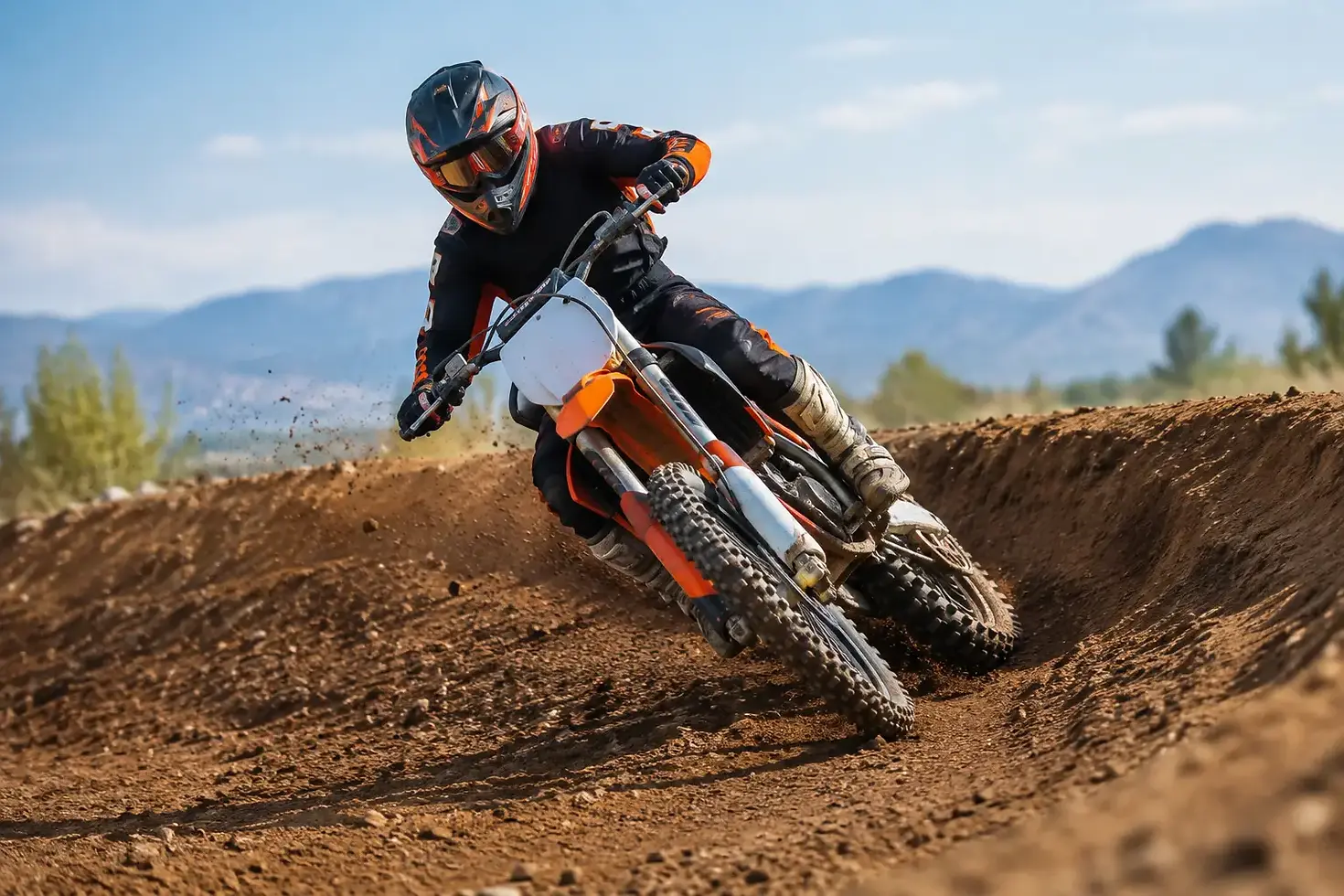
How to Ride Berms Better on Your Dirt Bike
A good berm should feel like it is helping you turn, not trying to throw you over the top. That is the difference between surviving a corner and carrying speed through it. Learning how to ride berms better comes down to a few repeatable habits: set up early, look through the exit, keep your body balanced, and use the throttle with purpose.
For beginners, berms can be intimidating because the bike leans farther than it does on a straightaway. Intermediate riders often have the opposite issue: they enter too hard, brake too late, or rush the throttle. The goal is not to attack every berm at maximum speed. The goal is to build a controlled cornering technique you can use on different tracks, in changing dirt, and at a pace that matches your current skill level.
How to Ride Berms Better Starts Before the Turn
Most berm mistakes begin on the approach. If you arrive too fast, out of position, and looking at the front wheel, there is very little you can fix once the bike is already leaned over.
Start by looking ahead. As you approach the corner, identify the entrance, the highest usable part of the berm, the apex, and the exit. Your eyes should move to the exit before the bike gets there. Dirt bikes tend to follow your vision. Looking at the rut, the soft spot, or the outside edge usually pulls your body and bike toward the exact place you do not want to go.
Do your major braking while the bike is upright. Use both brakes smoothly, then release the front brake as you begin to lean. Braking hard with the front wheel loaded into the side of a berm can make the front tire push or tuck. You may still need a light amount of rear brake in some corners, especially when traction is slick or the turn is tight, but your speed should mostly be under control before turn-in.
Choose a line that gives you room to finish the corner. On a wide, built-up berm, that often means entering lower, driving toward the middle or upper face, and exiting with the bike pointed down the next straight. On a narrow rut berm, the line may be decided for you. In either case, avoid entering so high that you run out of berm before the exit.
Set Your Body Position for Traction
As you transition into the corner, get your weight into an athletic, forward position. Your elbows should be up and out, not tucked against your sides. Keep a relaxed but secure grip on the handlebars. White-knuckling the grips makes it harder for the front wheel to track naturally through rough dirt.
Move forward enough to keep pressure on the front tire. A common beginner mistake is sitting too far back, especially when they are nervous about leaning. That unloads the front end and encourages the bike to push wide. Slide toward the front of the seat as you enter, then keep your chest active over the bars without folding at the waist.
Weight the outside footpeg through the turn. This gives the bike a stable platform and helps you stay connected to the ground. For many tight motocross corners, riders place the inside foot forward and off the peg, with the toe pointed up and clear of the ground. Do not drag your boot. A dragging foot can catch, twist your leg, or upset your balance.
There is a trade-off here. In a fast, deep berm with strong support, you may not need to stick the inside leg out as far as you would in a flat or loose turn. More advanced riders sometimes keep both feet on the pegs in certain conditions. If you are still building confidence, use the inside foot as controlled insurance in tighter turns, but keep your weight through the outside peg and your upper body focused on the exit.
Lean the Bike Into the Berm, Not Your Whole Body
A berm gives the tires something to push against. Let the bike lean into that bank rather than trying to keep it perfectly upright. The more support the berm has, the more confidently the bike can lean. Your body should stay balanced over the bike, not hang dramatically to the inside.
Think about separating your body from the motorcycle. The bike leans and follows the shape of the berm while your upper body stays calm, forward, and ready to react. If you lean your shoulders too far inside, especially early in the turn, you can lose pressure on the outside peg and put too much load on the front tire.
Keep your head level as much as possible. This simple cue helps prevent the feeling that the ground is rushing sideways underneath you. It also keeps your vision working. You do not need to stare at the top edge of the berm. Focus down the line toward where you want the bike to leave the corner.
Use the Throttle to Finish the Corner
The throttle is not just for speed. In a berm, controlled throttle helps settle the chassis and drive the rear tire into the dirt. The key word is controlled.
After braking and turning in, carry a neutral or lightly maintenance throttle until the bike is pointed toward the exit. Then begin rolling on the gas smoothly. Do not wait until you are fully upright to accelerate, but do not grab a handful of throttle while the front tire is still trying to find its line. A sudden burst of power can make the rear wheel climb the berm, spin excessively, or push the bike toward the outside edge.
On a smaller bike, you may need to carry more corner speed and keep momentum through the turn. On a more powerful 125cc-and-up bike, throttle timing matters even more because a sharp hit can change the bike's direction quickly. Match your input to the bike, the dirt, and the amount of support in the berm.
If the rear tire slides slightly but the bike is still driving forward, stay calm. Small movement is normal in loose dirt. Chopping the throttle or making a sudden steering correction often turns a manageable slide into a mistake. Keep looking out, stay balanced, and make a smooth adjustment.
Read the Berm Before You Commit
Not every berm deserves the same approach. A tall, packed berm after a track has been watered offers much more support than a dry, blown-out corner late in the day. Deep ruts can hold the bike in place, but they can also grab the front wheel and limit your options. Sand berms may look forgiving but can develop holes and soft edges that move under the tires.
Before your next lap, take a second to notice where the dirt is changing. Is the lower line smoother? Is the upper edge collapsing? Is there a braking bump before the turn? If the berm has a deep rut, commit to it with a steady front wheel rather than trying to steer across it at the last second.
In loose or rough conditions, slow down the process. Brake earlier, turn in with less aggression, and focus on a clean exit. Carrying two more miles per hour into a broken berm is rarely worth a crash. A smooth rider usually becomes a fast rider because they preserve traction and make fewer corrections.
Common Berm Mistakes to Fix First
The most common problem is entering too fast and trying to save the corner with more lean. Fix the approach first. Brake earlier and give yourself time to set your line.
The next issue is staring at the berm wall or front fender. Your eyes need to lead the bike toward the exit. Practice looking past the apex before you begin leaning.
Another frequent mistake is sitting back and pulling on the handlebars. This makes the front tire light and encourages the bike to run wide. Move forward, squeeze the bike with your legs, and let the bars guide rather than carry all of your weight.
Finally, avoid on-off throttle control. Braking, coasting, then snapping the throttle open makes the bike unsettled. Aim for a deliberate sequence: brake while upright, release into the turn, carry controlled throttle, then accelerate out.
Build Cornering Confidence One Berm at a Time
Choose one familiar berm and ride it repeatedly at a moderate pace. On the first few passes, focus only on braking earlier. Then work on looking through the exit. After that, add a smoother throttle roll-on. Trying to correct every part of your riding in one lap usually creates more tension, not better technique.
A trainer can also spot details that are hard to feel from the seat, such as entering too high, dropping an elbow, or getting on the gas before the bike is ready. At Dirt Bike Rentals and Training, structured track coaching gives developing riders a controlled place to work on those habits with clear feedback.
The next time a berm makes you hesitate, do not try to force speed. Set up earlier, trust your body position, and make the exit your target. Clean corners build confidence quickly, and confidence is what lets you carry more speed when the technique is ready.


Comments