
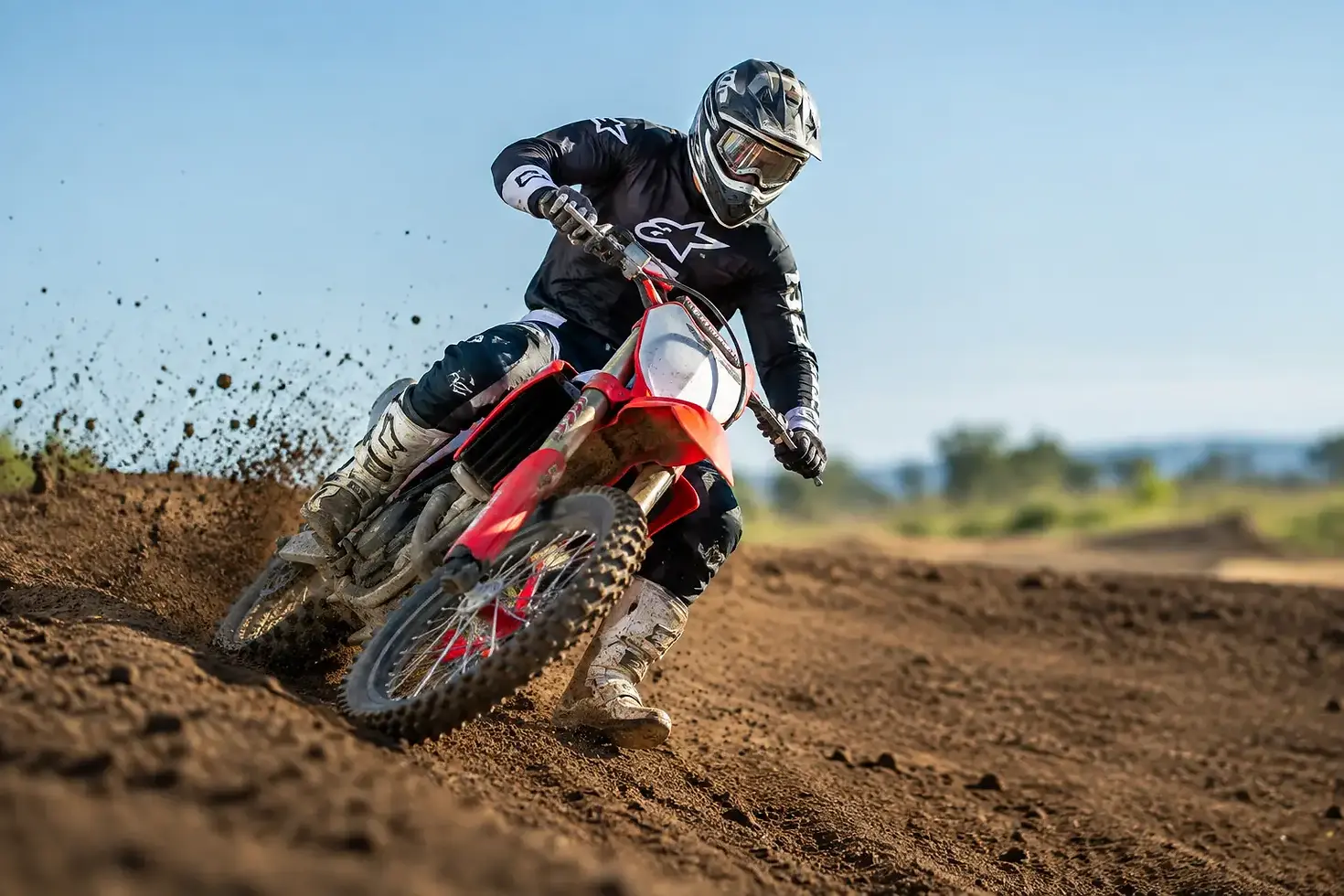
Top Motocross Cornering Mistakes to Fix Now
A corner can feel fast right up until the front tire pushes, the bike stands up, and you head wide toward the edge of the track. Most top motocross cornering mistakes are not caused by a lack of courage. They come from rushed braking, poor body position, and looking at the wrong place when the bike needs clear direction.
For beginner and developing riders, cornering is where basic controls have to work together. You are braking, choosing a line, positioning your body, leaning the bike, and getting back on the throttle in a few seconds. Clean corners are not about throwing the bike sideways. They are about building a repeatable process that keeps traction under you and gives you a better exit.
Why Corners Expose Riding Mistakes
Straightaways can hide sloppy technique. A rider can hold the throttle open and feel fast even while standing poorly or gripping the bike incorrectly. Corners reveal those habits immediately because the tires are already working hard to turn, brake, and accelerate.
The goal is not to enter every corner as fast as possible. The goal is to carry controlled speed through it and leave with the bike pointed where you want to go. A smooth rider who exits well will often pass the rider who charges in hard, loses momentum, and spends the next straightaway recovering.
Track conditions matter, too. A deep sandy berm, a flat hardpack turn, and a rutted corner demand different line choices and lean angles. The fundamentals stay the same, but forcing one technique onto every turn is another way riders lose traction.
Top Motocross Cornering Mistakes Riders Make
Braking too late and carrying panic into the turn
Late braking is one of the most common problems in motocross. Riders wait until they are close to the corner, grab a fistful of front brake, then enter the turn tense and off-balance. The front tire is overloaded before it has a chance to find the line.
Do your major braking while the bike is as upright as possible. Use both brakes with control, then release pressure progressively as you begin turning. You may still use light braking into certain corners, especially when the track is slick or steep, but it should be deliberate rather than a last-second save.
A useful cue is to have your entry speed set before the point where you commit to the turn. If you are still deciding whether you can make the corner, you probably waited too long to brake.
Looking down at the rut or front fender
Your bike tends to travel where your eyes go. When riders stare at a rut, a patch of loose dirt, or the front fender, they stop giving themselves a clear path through the corner. They also make late, reactive steering inputs because they are no longer looking ahead.
Lift your eyes and turn your head toward the exit. In a berm, look through the berm to where you want the motorcycle to leave it. In a flat corner, look toward the section of track where you will begin accelerating.
This does not mean ignoring obstacles. It means recognizing them early, choosing your line, and then focusing on the available exit. Your vision should lead the bike instead of following it.
Sitting too early or sitting in the wrong position
Many beginners sit down well before the corner, then roll in with their weight too far back. That leaves the front end light and makes it harder to load the front tire for a precise turn. Others stay standing so long that they never settle the bike into the rut or berm.
Approach the turn in a balanced standing position. As you enter, sit forward enough to put useful weight over the front of the bike while keeping your arms relaxed. You do not need to sit on the gas tank, but you should avoid hanging off the rear fender.
How far forward you sit depends on the bike, the turn, and the terrain. A tight flat corner generally needs more front-end traction than a deep berm that naturally supports the bike. Work on feeling that difference instead of using the same seat position every time.
Dropping the inside foot with no purpose
The inside foot is there for balance and protection, not for dragging through the dirt from the entry to the exit. A foot that is too far back, too low, or pointed toward the ground can catch and twist a knee or ankle. It also makes it harder to keep your lower body secure on the bike.
Bring the inside foot forward, keep it close to the front of the motorcycle, and point your toe up. Keep pressure on the outside footpeg. That outside peg pressure helps stabilize the bike and gives the tires a more consistent load.
In some high-speed berms, you may keep both feet on the pegs. In slower flat turns or ruts, the inside foot often comes out. The key is making that choice based on the corner, not treating it as an automatic habit.
Leaning your body with the bike instead of separating them
In a flat turn, riders often lean their whole body toward the inside with the motorcycle. That can reduce traction and make a front-end washout more likely. The bike needs to lean to turn, but your body can stay more centered or slightly to the outside to help load the tires.
Think about pressing the bike down into the turn while keeping your upper body calm and your head up. Your outside knee should help grip the bike, your elbows should stay up, and your hands should guide rather than wrestle the bars.
A berm allows more lean and support than a flat corner, but balance still matters. If you collapse toward the inside, you lose the strong, athletic position that lets the bike track through rough dirt.
Chopping the throttle at the wrong time
Abrupt throttle changes upset the chassis. Closing the throttle suddenly can throw weight onto the front tire and make the rear feel loose. Opening it too early can push the bike wide, spin the rear tire, or make you climb out of a rut before the corner is finished.
Carry a neutral, controlled throttle through the middle of the turn, then roll on smoothly as the bike points toward the exit. The throttle should build traction, not shock the rear tire. On a low-power bike, you may need to preserve more momentum. On a stronger bike, patience matters even more because the engine can break traction quickly.
The fastest exit usually comes from getting the bike turned first. If the front wheel is still fighting to make the corner, more throttle rarely fixes the problem.
Ignoring the best line for the next section
A fast-looking line is not always a fast line. Riders often dive to the inside because it feels shorter, only to leave the turn with no drive or a poor angle for the next jump, straightaway, or corner.
Before you enter, assess where the turn leads. A wider entry and later apex may give you a stronger, straighter exit. In a rough track, the smoother line may be faster even if it is slightly longer. In a rut, the best option may be the one that gives your front wheel a clean channel and keeps you out of braking bumps.
Do not change lines at the last second. Pick a line early, commit to it, and evaluate it after the lap. That is how riders develop track awareness instead of reacting to dirt one corner at a time.
A Simple Cornering Practice Plan
Trying to fix every issue in one session usually creates more confusion. Choose one familiar corner and make repeated passes at a manageable pace. First, focus only on braking earlier. Then make several laps where your only job is to look through the exit. After that, work on sitting forward, keeping the inside foot correct, and rolling the throttle on smoothly.
Video can help, but a trained set of eyes is faster. A coach can spot whether the issue begins during braking, body position, vision, or throttle timing. Dominic DeSimone's instructor-led training approach at Dirt Bike Rentals and Training is built around these real track corrections, giving developing riders a clear skill to practice rather than vague advice to simply go faster.
Build Speed From Control
The best cornering progress often feels less dramatic at first. You brake sooner, enter calmer, use fewer frantic inputs, and begin exiting with more traction. Then the speed shows up because you are no longer giving it away in the middle of the turn.
Pick one of these mistakes before your next ride and give it focused attention for a full session. A cleaner line and a controlled exit will do more for your lap than charging blindly into the next berm.


Comments