

Beginner Motocross Track Rules for Safer Riding
Your first track day should start before the engine does. The fastest way for a new rider to create a dangerous situation is to treat a motocross track like an open riding area. Beginner motocross track rules exist because riders of different ages, speeds, and skill levels share the same jumps, corners, and narrow track sections at the same time.
A motocross track has a flow. Learning that flow - and respecting the people around you - is part of becoming a capable rider. Speed comes later. First, build the habits that keep you predictable, aware, and ready to learn.
Beginner Motocross Track Rules Start at Check-In
Every facility has its own operating rules. Read the posted signs, attend any rider meeting, and ask the staff when something is unclear. Do not assume that rules at one Southern California track apply exactly the same way at another. Practice schedules, bike requirements, sound limits, class groupings, and gate procedures can change by facility and event.
Complete waivers honestly and make sure the track knows who is riding. If you are bringing a minor, follow the facility's guardian and release requirements before heading to the pits. This is not paperwork to rush through. It tells the track who is on site and helps staff respond properly if there is an issue.
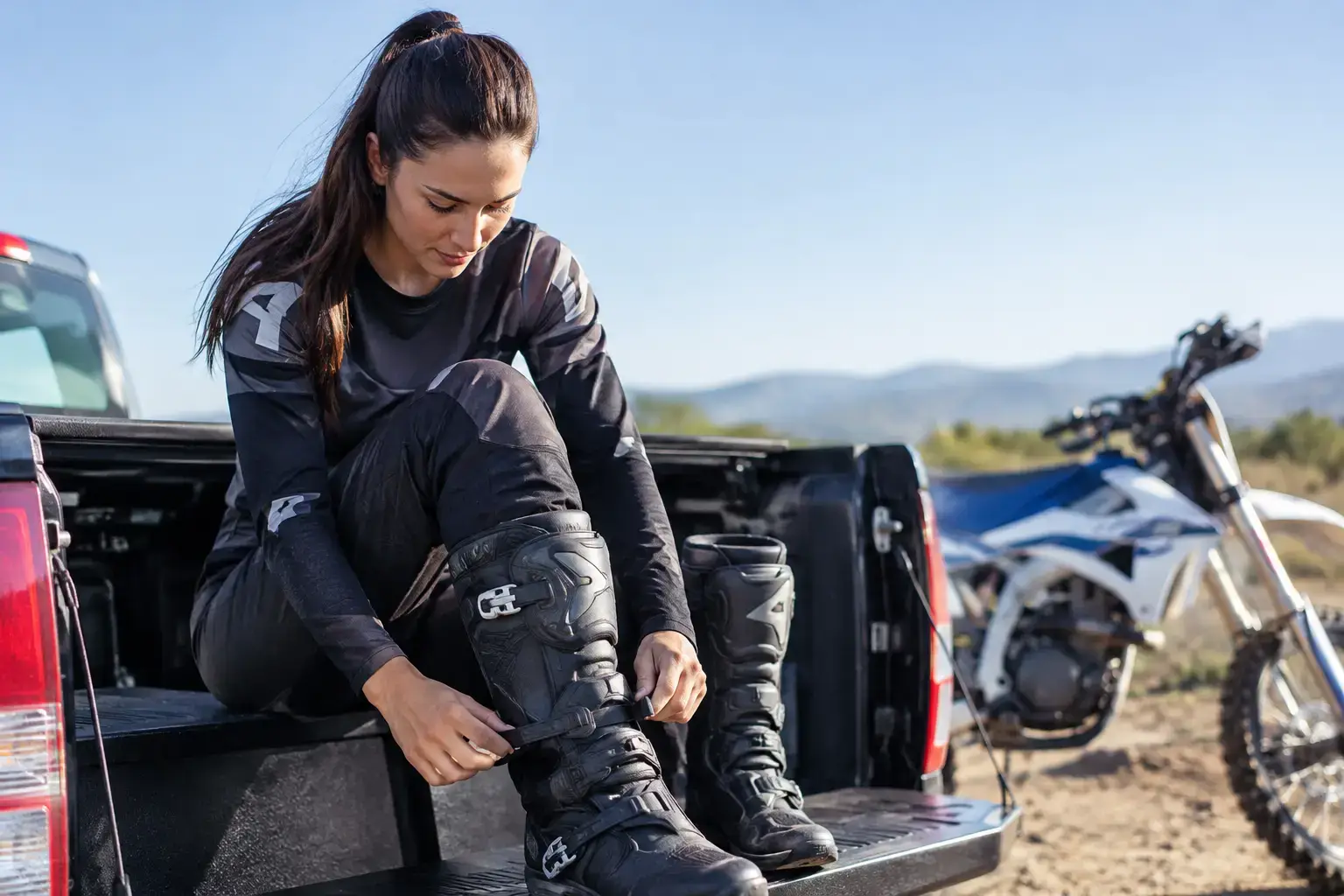
Use the required protective gear. At minimum, that usually means a properly fitted helmet, goggles, boots, long pants, gloves, and a jersey or long-sleeve riding shirt. Many riders also use knee protection, a chest protector, and a neck brace. Gear cannot prevent every injury, but motocross boots and eye protection alone make a major difference in common beginner falls.
Never ride under the influence of alcohol, cannabis, or any substance that affects reaction time and judgment. A track is not the place to test whether you feel "fine." If you are tired, overheated, injured, or distracted, sit out a session.
Learn the Track Before You Ride It Hard
The first laps are reconnaissance laps. Take them seriously, even if other riders are moving faster. Use a controlled pace to locate ruts, braking bumps, soft dirt, slick hardpack, jump faces, landings, track splits, and any area where the course narrows.
Do not try to clear a jump just because the rider ahead of you did. You may be on a different bike, carrying less speed, or approaching with a different line. Case a jump - meaning you land short on the top or face - and the result can be a hard impact, a crash, or damage to the bike.
Build one section at a time. For a beginner, rolling jumps, riding the correct line through corners, and maintaining a steady throttle are productive goals. A trainer can help you decide when a jump is appropriate to progress and when it should still be rolled. That decision should be based on your position, speed, control, and consistency, not pressure from the riders around you.
Stay on the marked course and ride only in the posted direction. Cutting across the infield, riding backward on the track, or making your own exit can put you directly in the path of someone carrying speed into a blind corner or jump landing. If you miss a turn or become unsure of the route, slow down safely and continue forward until you reach an approved way off the track.
Know the Flags Before the Gate Drops
Flags communicate hazards faster than words can. Track staff may use slightly different procedures, so the rider meeting and posted rules always come first. Still, every new rider should recognize these common signals:
Green flag: The track is open or the session is underway. Continue riding with normal awareness.
Yellow flag: There is a hazard ahead. Slow down, stay alert, and do not jump or pass until you are clear of the flagged area.
Red flag: Stop riding as safely and quickly as possible. Do not continue to the pits at race pace or assume the flag does not apply to you.
Black flag: You have been called off the track, often because of a mechanical issue, unsafe riding, or a rules concern. Exit as directed and speak with staff.
Checkered flag: The session or race is over. Finish the lap at a controlled pace and exit where instructed.
Yellow flags deserve special attention. A downed rider, bike, medic, or track worker may be just beyond your line of sight. Jumping into that area can turn one incident into a much more serious one. Back off early, keep both wheels on the ground when required, and wait until you are fully past the hazard before returning to normal pace.
Passing and Being Passed Without Creating Problems
Motocross is fast, but predictable riding is safer than aggressive riding. As a beginner, hold your line through turns and across jump sections. Sudden swerves, stopping in the middle of the course, or moving unpredictably to block a faster rider are common causes of contact.
If someone is catching you, do not panic and do not make a last-second move. Keep riding your normal line and let the faster rider choose a safe pass. Looking over your shoulder repeatedly can pull your attention away from braking markers, ruts, and obstacles in front of you.
When you become the faster rider, pass with room. Do not cut sharply across another rider's front wheel after making the pass. Avoid forcing a pass in a narrow section, on a jump face, or near a rider who is visibly struggling. Practice days often put riders with very different experience levels on the track. A clean pass protects both riders and keeps the session moving.
If your bike stalls, you crash, or you need to stop, get yourself out of the racing line as quickly as it is safe to do so. Move toward the edge of the track, especially away from jump landings and blind corners. If you cannot move safely, signal for help and follow staff direction. Do not stand on the landing of a jump trying to restart a bike.
Pit Rules Matter as Much as Track Rules
The pits are active work areas, not parking lots. Riders may be loading bikes, warming engines, fueling, walking children, or backing trailers. Ride slowly only where the facility permits pit riding. Many tracks prohibit it entirely except when moving directly to and from the entrance.
Keep the throttle closed around people. Do not do burnouts, high-speed passes, or wheelies in the pits. Keep kids clear of moving motorcycles, secure your bike on a stand when working on it, and let a hot engine cool before handling parts near the exhaust.
Fuel only with the engine off and away from flames, smoking, and hot exhaust components. Clean spills immediately. Bring water, basic tools, and any approved bike-specific supplies you need, but do not spread equipment into traffic areas. A clean pit setup makes it easier to focus on riding and reduces avoidable trips and falls.
Respect quiet hours, parking boundaries, and staff directions. A professional track day depends on riders who take responsibility for the space, not just their own lap times.
Ride Within Your Skill Level, Not Your Ego
Beginner riders often make the biggest mistakes when they try to keep up with friends. The rider who is faster than you may have years of seat time, a larger bike, or knowledge of the track conditions. Matching their pace is not a requirement for a successful day.
Use short sessions if you are new. Fatigue changes your posture, your throttle control, and your ability to react to ruts or braking bumps. Take a break before your arms are pumped and your focus fades. Drink water, check your bike, and think about one adjustment for the next session.
A few focused coaching cues can move a rider forward faster than dozens of uncontrolled laps. At Dirt Bike Rentals and Training, instruction is built around real track technique: body position, cornering, braking, throttle control, and safe progression. Whether you ride your own bike or are starting with a rental, the goal is the same - develop control before adding speed.
Ask Questions Before They Become Mistakes
New riders should never feel embarrassed to ask where to enter, which practice group to join, whether a jump is suitable to roll, or what a flag procedure means. Good track staff and experienced coaches would rather answer a quick question than respond to an avoidable crash.
Watch a session from the fence before riding if the track is unfamiliar. Notice where riders enter and exit, where they line up, how they approach the larger obstacles, and which areas staff monitor closely. Then ride your own plan at a pace you can control. The rider who respects the rules on day one is building the awareness that makes every future lap better.


Comments