

Dirt Bike Rental Age Requirements in California
A 13-year-old who fits a smaller bike, follows instructions, and has a parent present may be better prepared for a first session than an adult who has never used a clutch. That is why dirt bike rental age requirements are only one part of the decision. At a professional riding facility, the rider’s physical fit, maturity, experience, supervision, and ability to follow safety direction matter just as much.
For families, new riders, and adults getting into motocross, the goal is not simply to meet a minimum age. The goal is to put each rider on an appropriate bike in a controlled environment with a plan for safe progression.
How Dirt Bike Rental Age Requirements Usually Work
Rental age rules are set by the individual rental provider, and they can differ based on the bike class, the riding area, insurance requirements, track policies, and whether instruction is included. There is no single age standard that applies to every dirt bike rental in California.
In practice, operators commonly separate riders into two groups: minors who need a parent or legal guardian involved in the booking and waiver process, and adults who can sign for themselves. A provider may also establish its own minimum age for youth bikes, limit minors to certain engine sizes, or require a parent or guardian to remain on site during the session.
That structure is not just paperwork. A signed waiver does not turn an oversized bike into a safe fit, and a birthday alone does not show whether a rider can handle throttle control, braking, or track direction. Responsible rental decisions account for the whole rider.
Minors need parent or guardian participation
If the rider is under 18, plan on having a parent or legal guardian complete required paperwork and be available for the rental or training session. Some facilities may require the guardian to be physically present rather than simply providing permission in advance. Confirm that requirement before arriving, especially if another family member is bringing the rider to the track.
Parents should also be ready to share honest information about prior riding experience. A child who has used a small trail bike may still be new to motocross riding, where braking points, body position, cornering, and track awareness are more demanding.
Adults may still face experience-based limits
Turning 18 does not mean every bike is automatically the right rental choice. An adult beginner may fit a full-size machine physically but need a smaller-displacement bike, a lower-pressure practice area, or trainer-led instruction before riding a faster motocross bike.
This is a good trade-off. Starting on a manageable bike may feel less exciting for the first few minutes, but it helps riders build the controls that make faster riding possible later. Confidence built through proper technique lasts longer than confidence built by surviving a bike that is too aggressive.
Age Is Not the Same as Bike Fit
Bike size is one of the biggest factors behind rental eligibility. Smaller 110cc-and-under bikes are generally a better starting point for younger riders, smaller adults, and first-time riders because power delivery and physical size are more manageable. Bikes in the 125cc-and-up category can be appropriate for larger, more experienced, or more technically ready riders, but the right choice depends on the individual.
A rental provider or instructor will typically look at whether the rider can reach the controls, place feet appropriately when stopped, operate the clutch and brake levers, and maintain a stable body position. Strength and coordination matter too. A rider should not be fighting the motorcycle before the session even begins.
For youth riders, avoid choosing a bike based only on what friends ride or what looks impressive. A bike that allows clean starts, smooth stops, and repeatable turns is the bike that creates progress. Moving up should happen when the rider demonstrates control, not when they simply meet an age number.
What First-Time Riders Should Expect
A quality rental experience should begin with preparation, not a quick handoff of the handlebars. New riders need a clear introduction to the bike’s controls, starting procedure, throttle response, braking, body position, and facility rules. They also need to understand where they are permitted to ride and how to react if they feel overwhelmed.
For a first session, instruction is often the smarter choice than renting a bike and trying to figure it out alone. A trainer can identify issues early, such as looking down through turns, gripping the bars too tightly, using too much front brake, or standing in the wrong position. Those are normal beginner mistakes, but correcting them early reduces frustration and helps riders build better habits.
At Dirt Bike Rentals and Training, the focus is on getting riders started with a structured approach, including rental options by bike class and motocross instruction led by Pro AMA racer Dominic DeSimone. That trainer-led setting is especially valuable for young riders and adults who want more than a casual first ride.
Safety Gear Can Affect Rental Eligibility
Age requirements do not stand alone from gear requirements. A rider who meets the age policy but arrives without proper protective equipment may not be ready to ride that day. Confirm what gear is included, what gear must be brought, and whether the facility has specific standards for helmets, boots, eye protection, gloves, pants, jerseys, chest protection, or knee protection.
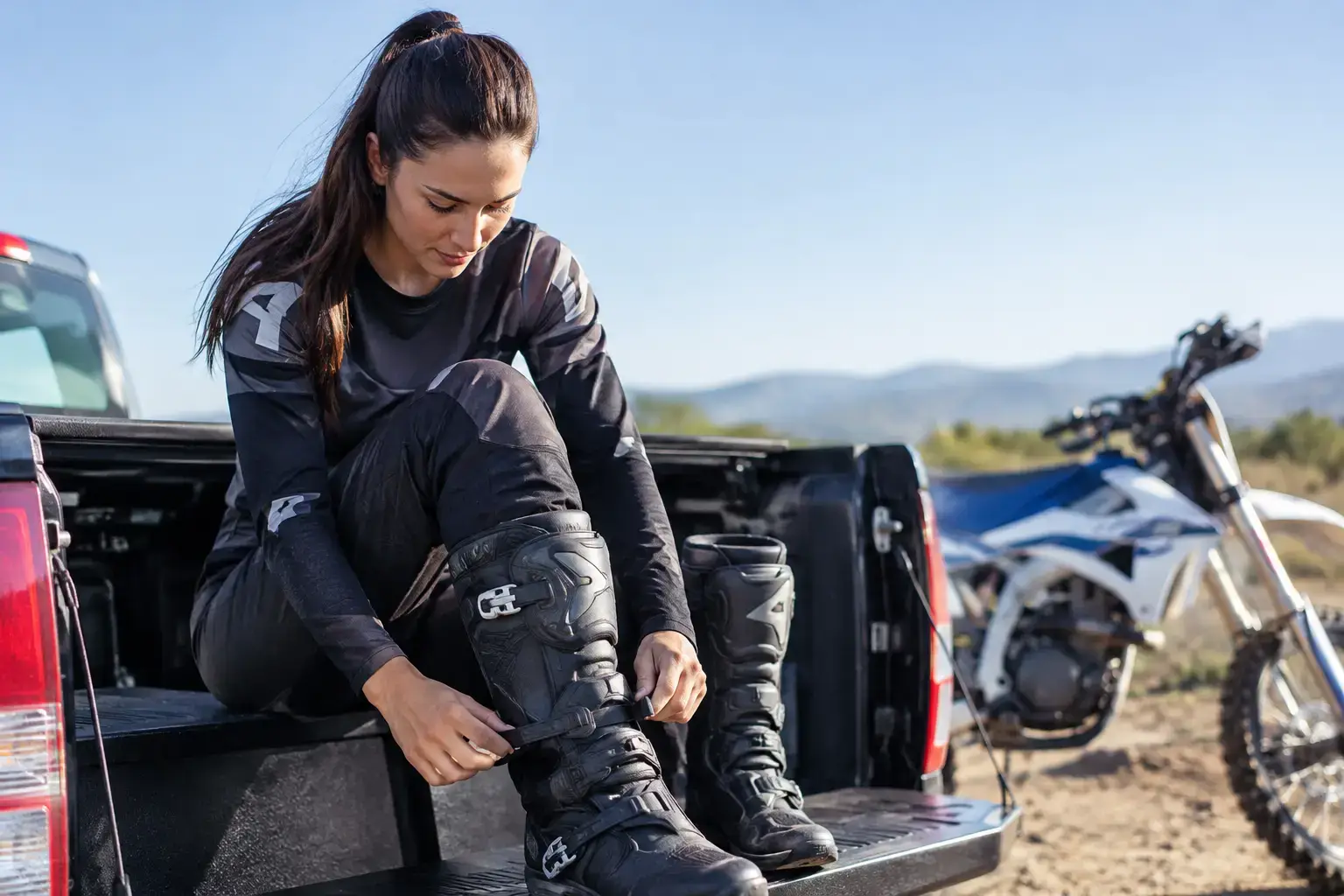
The helmet must fit correctly. It should sit level, feel secure, and fasten properly without excessive movement. Motocross boots are also a major part of rider protection because they support the ankle and shin while shielding feet from rocks, pegs, and impacts. Sneakers may be fine for many activities, but they are not a substitute for riding boots on a dirt bike.
For minors, parents should treat gear as part of the booking decision, not an afterthought. Proper equipment helps protect the rider, but it also signals that the family is approaching the sport with the seriousness it deserves.
Questions to Ask Before Booking a Rental
Before you reserve a bike, get clear answers on the details that affect your rider. Ask whether there is a minimum age for the specific bike class, whether a parent or legal guardian must be on site, and whether a beginner can participate with no previous dirt bike experience.
Also ask how bike fit is assessed, what protective gear is required, and whether instruction is available for first-time riders. If the rider is young, ask whether the session is paced for youth beginners and how track access is managed around other riders. These questions are practical, not overcautious. They prevent the common mistake of booking a session that does not match the rider’s current ability.
If a provider recommends a smaller bike or a coached session, consider that a positive sign. Good operators protect the rider’s learning curve instead of pushing a bigger, faster rental just to complete a sale.
A Parent’s Checklist for Young Riders
A young rider is usually ready to try a rental session when they can listen carefully, follow directions consistently, wear required gear without complaint, and stay calm when corrected. They do not need to be fearless. In fact, a little healthy caution is often better than overconfidence.
Talk through the day before you arrive. Explain that the first objective is control, not speed. Let the rider know it is acceptable to stop, ask a question, or take a break. Young riders improve faster when they feel supported rather than pressured to keep up with older or more experienced people.
Parents should also be realistic about attention span and fatigue. A short, well-coached session can be more productive than extending the day until a tired rider starts making preventable mistakes. Dirt riding is physically demanding, especially for beginners who are learning to stand, brake, steer, and manage the bike at the same time.
Start at the Right Level, Then Build
The best age to rent a dirt bike is the age when the rider can be properly fitted, supervised, and coached at an appropriate level. For minors, that usually means active parent or guardian involvement. For adults, it means being honest about experience and selecting a bike that supports learning rather than fighting the motorcycle.
A first ride does not need to look fast to be successful. Clean starts, controlled stops, steady turns, and a rider who leaves wanting to learn more are the results that matter. Start there, and the speed will have a safer place to grow.


Comments