

First Dirt Bike Lesson FAQ: What to Expect
The first time the bike moves under you, it can feel faster and less predictable than expected. That is exactly why this FAQ for a first dirt bike lesson focuses on the practical questions that matter before you reach the track: bike fit, protective gear, safety, and what you will actually learn.
A good beginner session is not about looking fast on lap one. It is about building control you can repeat - starting, stopping, standing, turning, and using the throttle without panic. With structured coaching, first-time riders can begin in a real riding environment with a clear plan instead of trying to figure it out alone.
First Dirt Bike Lesson FAQ
Do I need any riding experience?
No. A first lesson can be built for someone who has never operated a dirt bike, as well as someone who has ridden casually and wants better fundamentals. The starting point matters. A true beginner may spend more time learning controls, body position, and smooth starts. A rider with some experience may move sooner into braking, cornering, standing technique, and track awareness.
Be honest about your experience when booking. Saying you have ridden before when you have only sat on a bike does not help you progress. A trainer can adjust the pace far more effectively when they know where you are starting.
Will the bike be too big or too powerful?
It should not be. Bike selection is one of the biggest factors in a productive first session. A smaller-displacement bike that fits your height and confidence level is usually a better learning tool than a larger bike that feels intimidating. You need to be able to reach the controls comfortably, support the bike when stopped, and work the throttle and clutch without fighting the machine.
For younger riders and smaller adults, a 110cc-and-under rental may be the right place to start. Larger riders, or riders ready for a full-size platform, may fit better on a 125cc-and-up option. Engine size alone does not tell the whole story. Seat height, bike weight, clutch setup, and rider confidence all matter.
What should I wear to a dirt bike lesson?
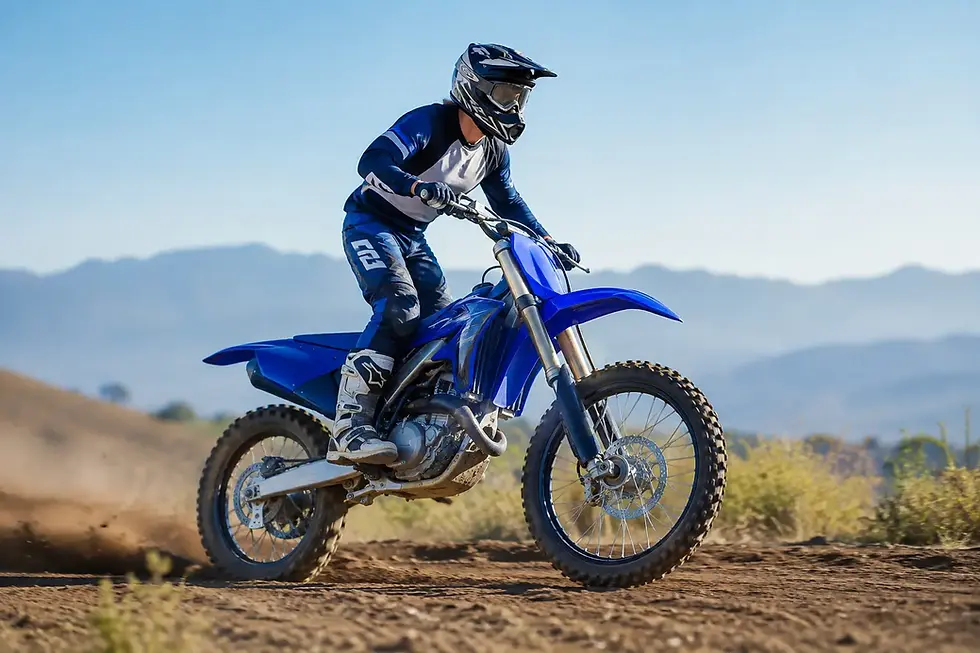
Wear clothing that protects you and lets you move. Proper riding gear is strongly recommended: a DOT-approved helmet, goggles, gloves, motocross boots, long pants, and a jersey or long-sleeve top. Knee protection, elbow protection, and a chest protector add another level of coverage, especially for new riders who are still learning how to balance the bike at low speed.
Motocross boots deserve special attention. Regular sneakers do not protect your ankles, shins, or feet from foot pegs, rocks, the exhaust area, or a bike tipping over. Boots also make it easier to stand on the pegs and use the controls with purpose.
Bring water, especially for a Southern California riding day. Track conditions, heat, and the physical work of standing and controlling the bike can tire beginners faster than they expect.
Do I need to bring my own dirt bike?
Not necessarily. Rentals remove one of the biggest barriers to getting started: you do not need to buy, transport, maintain, or store a bike before finding out whether you enjoy riding. A rental-and-training session lets you focus on learning the fundamentals with equipment selected for the experience.
If you already own a bike, training on it can be valuable too. You will learn its clutch feel, throttle response, braking behavior, and ergonomics. That said, an instructor may recommend changes to lever position, controls, or setup if the bike is making it harder for you to ride correctly.
What happens during the first lesson?
A quality lesson starts before the engine does. Expect an introduction to the bike, its controls, protective equipment, riding-area rules, and safety expectations. You should understand where the clutch, front brake, rear brake, throttle, shifter, and kill switch are before you try to ride.
From there, most first lessons build from simple movements. You may practice starting and stopping in a controlled area, finding balance at a walking pace, using smooth throttle input, and braking without locking up. Once those basics are more consistent, the session can progress into standing posture, turns, body position, and riding lines appropriate to your level.
The pace is not the same for every rider. Someone who picks up clutch control quickly may cover more ground. Someone who needs extra repetition on braking should get it. Rushing past a weak fundamental usually creates a bigger problem later.
Is dirt bike training safe for beginners?
Dirt biking has real risk. Bikes are powerful machines, track surfaces change, and falls are part of the sport. The goal of professional instruction is not to pretend those risks do not exist. It is to manage them through proper equipment, an appropriate bike, controlled drills, clear rules, and coaching that prevents common beginner mistakes.
The safest first session is one where the rider is not pressured to keep up with more advanced people. Beginners need room to focus on their own controls and decisions. A trainer-led environment also gives you someone who can spot habits early, such as grabbing too much front brake, standing too stiffly, looking down, or holding the throttle too tightly.
Will I learn to jump in my first lesson?
Probably not, and that is a good thing. Jumps are a later skill built on position, throttle control, braking, balance, and the ability to ride consistently over changing terrain. A rider who can safely accelerate, brake, turn, and stand has a foundation that makes future jump instruction far more productive.
If you arrive wanting to jump immediately, expect a trainer to reset the priority. Motocross is more fun when your technique supports your ambition. There is no advantage in skipping steps.
What if I am nervous about falling?
Most first-time riders are nervous, even if they do not say it out loud. The answer is not to force confidence. It is to build it through manageable repetitions. When you learn how the brakes feel, where to look through a turn, and how to keep a relaxed grip, the bike starts to feel less foreign.
Falling can happen, particularly at low speed while learning balance and turns. Protective gear and controlled practice reduce the consequences. More importantly, instruction helps you avoid the preventable falls that come from panic throttle, poor body position, or looking directly at the obstacle you are trying to miss.
How physically demanding is a two-hour session?
Two hours of focused riding can be demanding, even for someone who exercises regularly. Dirt bike control uses your legs, core, hands, forearms, and concentration. Standing on the pegs, holding riding position, and processing coaching all add up.
You do not need to be an elite athlete to start. You do need to pace yourself, stay hydrated, and tell the trainer if fatigue is affecting your control. Taking a short reset is smarter than practicing bad habits while tired.
What should I practice after my first lesson?
Practice the exact skills that felt difficult, not just the fun parts. For many new riders, that means smooth starts, controlled stops, standing with knees slightly bent, looking ahead, and making wide, balanced turns. Short, focused practice sessions are more useful than riding until you are exhausted.
Keep your expectations realistic. One lesson can give you a strong start, but riding skill develops through repetition and feedback. Working with an experienced instructor such as Pro AMA racer Dominic DeSimone can help you identify the next skill to train instead of guessing.
How do I know I am ready for more advanced motocross instruction?
You are ready to progress when basic control is becoming automatic. You should be able to start and stop without hesitation, use both brakes with control, stand comfortably, maintain a balanced position, and ride predictable turns at a pace appropriate to the track. You do not need to be perfect, but you need enough consistency to learn the next task safely.
From there, training can become more specific: corner speed, line choice, braking into turns, ruts, small obstacles, starts, and eventually jump technique. Progress is not about moving to the biggest bike or the largest jump. It is about gaining control that holds up when the terrain gets more demanding.
Your first lesson is simply the place to start. Show up prepared, ask direct questions, and give yourself permission to learn the basics correctly. The rider who builds control early has more options, more confidence, and a lot more fun every time the gate drops or the trail opens up.


Comments