
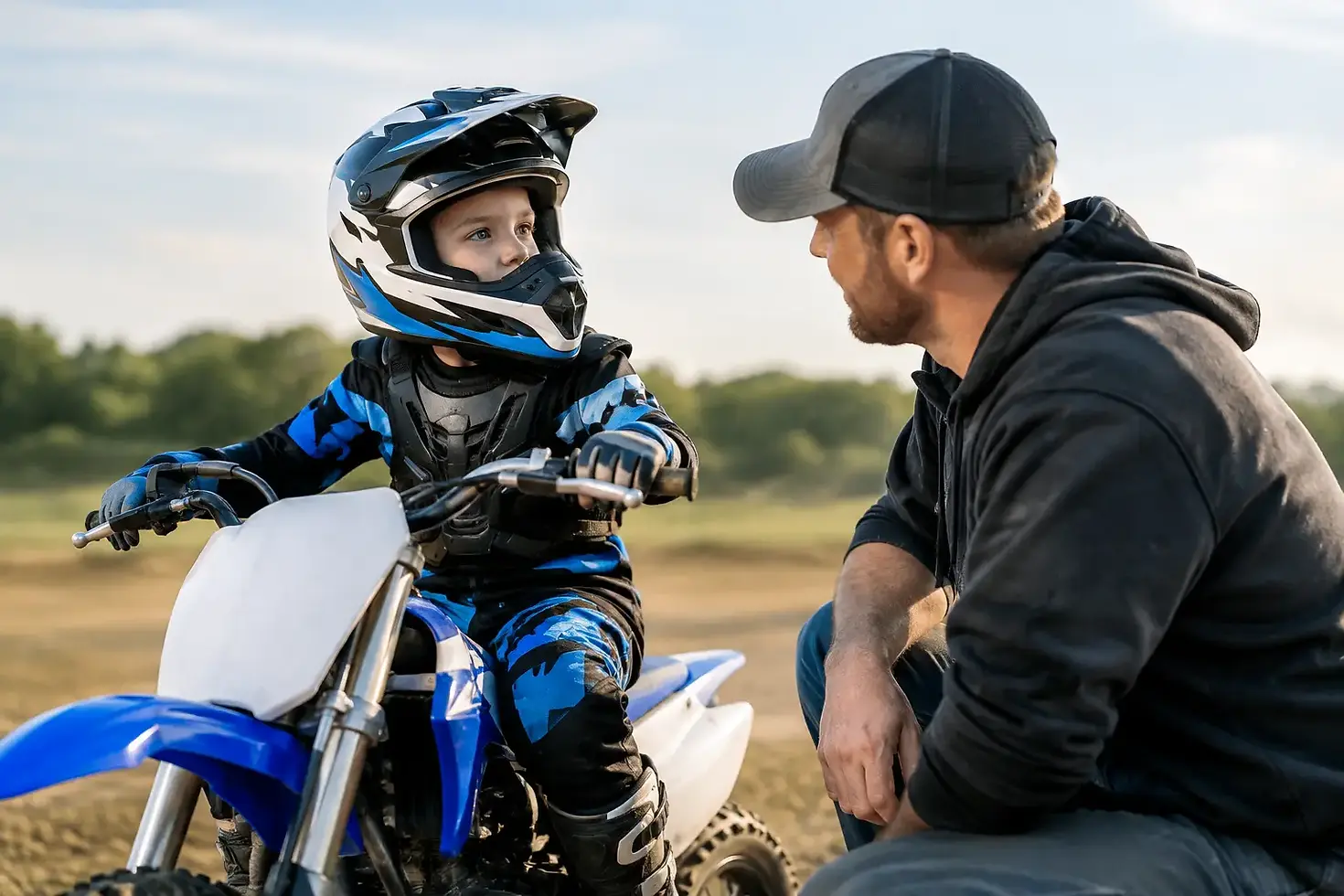
When Should Kids Start Motocross Safely?
A child who can ride a bicycle is not automatically ready for a motocross track. The better question is not just when should kids start motocross, but whether they can listen, stop on command, handle a properly sized bike, and stay focused around other riders. Age matters, but readiness matters more.
Motocross can build confidence, coordination, discipline, and real riding skill. It also asks a lot from a young rider. A good first experience is controlled, coached, and matched to the child - not rushed because a friend has a faster bike or because they are eager to hit the biggest jump they can find.
When Should Kids Start Motocross?
Many kids can begin learning basic dirt bike controls around ages 4 to 6 on a small, low-powered bike in a flat, open area. At that stage, the goal is not competitive motocross. It is learning balance, throttle control, braking, body position, and respect for the machine.
A child around 6 to 9 may be ready for beginner track riding if they have already developed basic control and can follow direction consistently. They should be able to start, stop, turn, stand on the foot pegs when instructed, and remain calm when the bike feels unfamiliar. Younger riders can progress quickly, but only if the foundation is solid.
By ages 9 to 12, many riders have the strength, attention span, and coordination to work on more structured motocross skills. That may include cornering technique, braking markers, standing through rough sections, and safe approaches to small jumps. Still, a 10-year-old with consistent practice and a coach may be safer than a 14-year-old starting for the first time on an oversized bike.
There is no universal starting age. A cautious, coordinated 5-year-old with patient instruction may be ready for basic riding. A child who struggles to focus, ignores safety rules, or is intimidated by the engine may need more time. Waiting is not falling behind. It is part of keeping the sport fun.
Readiness Matters More Than the Number on a Birthday Cake
Before a child rides at a motocross facility, look at how they behave around equipment and instruction. A rider who wants to go fast but cannot consistently use the brakes is not ready for track speed. A rider who can ride slowly, look ahead, and respond to coaching has a much better starting point.
Emotional readiness is often overlooked. Motocross requires a child to handle frustration, take correction, and get back on the bike after a mistake. Falling is part of learning, even at low speed. A young rider does not need to be fearless. In fact, some healthy caution is useful. They do need to be willing to listen and try again without panicking or acting impulsively.
Parents should also assess physical fit. Can the rider reach the controls comfortably? Can they pick the bike up with help if it tips over? Can they stand and maintain balance while moving? A child who is stretched out on a bike or unable to touch the ground with enough stability will have a harder time building good habits.
Start With the Right Bike, Not the Biggest Bike
The best beginner motocross bike is one a child can control. It should have manageable power, a seat height that supports confidence, and controls sized for smaller hands and feet. More engine size does not equal more fun when a rider is fighting the throttle or afraid to stop.
For smaller beginners, a 50cc bike is often the starting point. As size, ability, and confidence improve, riders may move into larger youth bike classes. The right progression depends on the bike’s design, the rider’s height and weight, prior experience, and where they will ride. A child moving from a small trail bike to a race-oriented machine may need time to adjust even if the engine displacement looks similar.
Automatic or semi-automatic options can help a young rider focus on steering, braking, and body position before managing a manual clutch. That is not a shortcut. It is a practical way to build control one skill at a time. When a rider is ready for a clutch, structured coaching can make that transition much smoother.
Avoid buying a bike based only on what the rider might grow into next year. An oversized bike encourages poor posture, delayed braking, and fear-based riding. A properly fitted smaller bike usually develops stronger technique faster.
The First Sessions Should Be About Control
A child’s first motocross sessions should not begin with lap times, deep ruts, or big jumps. Begin on level ground or a beginner-friendly practice area where the rider can learn without pressure. The first objective is simple: make the bike do what the rider intends, every time.
A good first lesson works through starting and stopping, smooth throttle use, braking with both controls, turning while looking ahead, and riding in a balanced standing position. From there, a coach can introduce small changes in terrain, wide corners, and basic track awareness.
Jumping should come later. Kids often want to jump immediately because it looks like the exciting part of motocross. But a jump exposes weaknesses in throttle control, body position, and vision quickly. A rider who cannot smoothly roll through a corner or stay balanced over braking bumps should keep building those skills before leaving the ground.
At Dirt Bike Rentals and Training, beginner instruction is designed around real riding fundamentals, with guidance from Pro AMA racer Dominic DeSimone. The point is to help new riders develop usable technique in a track environment, not simply send them out and hope they figure it out.
Gear Is Part of the Starting Decision
A child is not ready to ride without properly fitted protective gear. A helmet is essential, but it is only one part of the setup. Motocross boots protect the feet, ankles, and lower legs while also helping the rider control the pegs. Goggles protect vision from dirt and debris. Gloves improve grip, while a jersey and pants provide abrasion coverage.
For young riders, chest protection, knee protection, and a neck-support system may also be appropriate depending on the rider, terrain, and type of riding. Gear should fit securely without restricting movement. A loose helmet that shifts, boots that are too large, or goggles that slide down can distract a child at the exact moment they need to focus.
Parents should also model the right standard. If safety gear is treated as optional when it is hot or inconvenient, a young rider learns that shortcuts are normal. Motocross rewards consistent habits, and putting on gear correctly is one of the first habits to establish.
Coaching Makes a Major Difference
Kids can learn some basics from family members, but motocross instruction is not just about knowing how to ride. It is about seeing what a beginner is doing wrong before that mistake becomes automatic. A trained instructor can correct elbows that are too low, a rider looking down at the front fender, overuse of the rear brake, or a stiff body position that makes the bike harder to control.
Coaching also gives parents a better role. Instead of trying to manage every correction from the sidelines, parents can focus on encouragement, hydration, rest, and helping their child enjoy the process. That is especially valuable for a nervous beginner or a rider who becomes discouraged after a fall.
A structured session also introduces track etiquette. Young riders need to understand where to enter and exit, how to watch for other bikes, why they should not stop in blind areas, and how flags or track rules affect their riding. These are core safety skills, not advanced details.
Watch for Signs They Need More Time
Progress should not be forced. A child may need to stay on easier terrain or take a break from track riding if they repeatedly freeze on the controls, panic after small mistakes, refuse to follow safety direction, or show fatigue that changes how they ride.
Sometimes the issue is not ability. It may be an ill-fitting bike, an uncomfortable helmet, too much pressure from adults, or a session that is simply too long. Short, positive practice sessions are usually better than pushing a tired rider through another hour of frustration.
The right time to start motocross is when a child has the interest, the physical fit, the right equipment, and an environment built for learning. Give them a bike they can manage, skills they can repeat, and coaching that makes the next lap feel achievable. That is how a young rider earns confidence that lasts far beyond their first day at the track.


Comments