

125cc Rental Bike Guide for First Track Days
A 125cc dirt bike is where many riders stop just putting around and start learning how motocross really feels. It is light enough to move beneath you, quick enough to demand attention, and capable enough to teach proper cornering, braking, body position, and throttle control. This 125cc rental bike guide will help you decide whether this bike class fits your experience level and how to arrive prepared for a productive day at the track.
Who Should Rent a 125cc Dirt Bike?
A 125cc-and-up rental is usually a strong fit for teens and adults who are physically comfortable on a motorcycle and ready for more than a small beginner bike. You do not need race experience, but you should be able to understand basic controls, follow directions, and ride with controlled inputs rather than relying on full throttle or heavy braking.
For a first-time rider, the right answer depends on size, coordination, and confidence. A smaller rider who has never used a clutch may progress faster on a 110cc-and-under bike before stepping up. Starting too big can make basic skills harder because the rider spends the whole session fighting the bike instead of learning from it.
A 125cc bike makes sense when you have enough reach to manage the seat height, enough hand strength to work the clutch and front brake, and enough discipline to listen to track and coaching instructions. It is not about proving you can handle the fastest option. It is about using a bike that gives you room to improve without taking away control.
What to Expect From a 125cc Rental Bike
A 125cc motocross bike responds faster than a small trail-style machine. The suspension is built for track conditions, the brakes are stronger, and the power comes on more aggressively when the engine is in its usable range. That responsiveness is exactly why this class can be so valuable for developing riders.
Expect to work more actively on the bike. Your body position changes as you brake, enter corners, accelerate, and ride uneven terrain. Standing correctly on the foot pegs, keeping your elbows up, looking ahead, and using your legs to grip the bike are not cosmetic details. They are the foundation of control.
If the bike uses a manual clutch, spend the first part of your session getting familiar with the friction zone. Smooth starts and controlled shifts are more useful than trying to ride fast right away. A stalled engine is normal when learning. Repeatedly dumping the clutch, rushing starts, or grabbing the front brake is what creates problems.
The goal is not to ride a 125cc bike at its limit. The goal is to develop clean habits that still work when your speed increases.
Choose the Right Session Before You Ride
The best rental experience starts with an honest assessment of your current ability. Tell the team whether you have ridden before, what type of bike you have used, whether you are comfortable with a clutch, and what you want to improve. A rider who says they are advanced but cannot stop smoothly or turn with balance loses valuable time at the track.
A rental-only session can work for riders who already understand the basics and want track time on the right equipment. For beginners and developing riders, adding motocross instruction is often the better investment. Coaching gives your session a purpose. Instead of making the same mistake for two hours, you can identify it, correct it, and repeat the right movement.
At Dirt Bike Rentals and Training, instruction is led by Pro AMA racer Dominic DeSimone. That matters because good coaching is not just encouragement from the sidelines. It means getting clear feedback on line choice, posture, braking timing, throttle control, and how to build speed without riding over your ability level.
Rental and training solve different problems
A rental removes the cost and uncertainty of buying a bike before you know whether the sport is right for you. Training helps you use that opportunity well. If you already own a bike, a dedicated training session may be the better choice. If you do not own one yet, a 125cc rental paired with coaching lets you test the experience in a real riding environment.
There is no single correct path. A new rider may need more time on basic controls. An intermediate rider may need focused help with corners, jumps, or carrying momentum. Be clear about your starting point, then select the session that supports it.
What to Wear and Bring to the Track
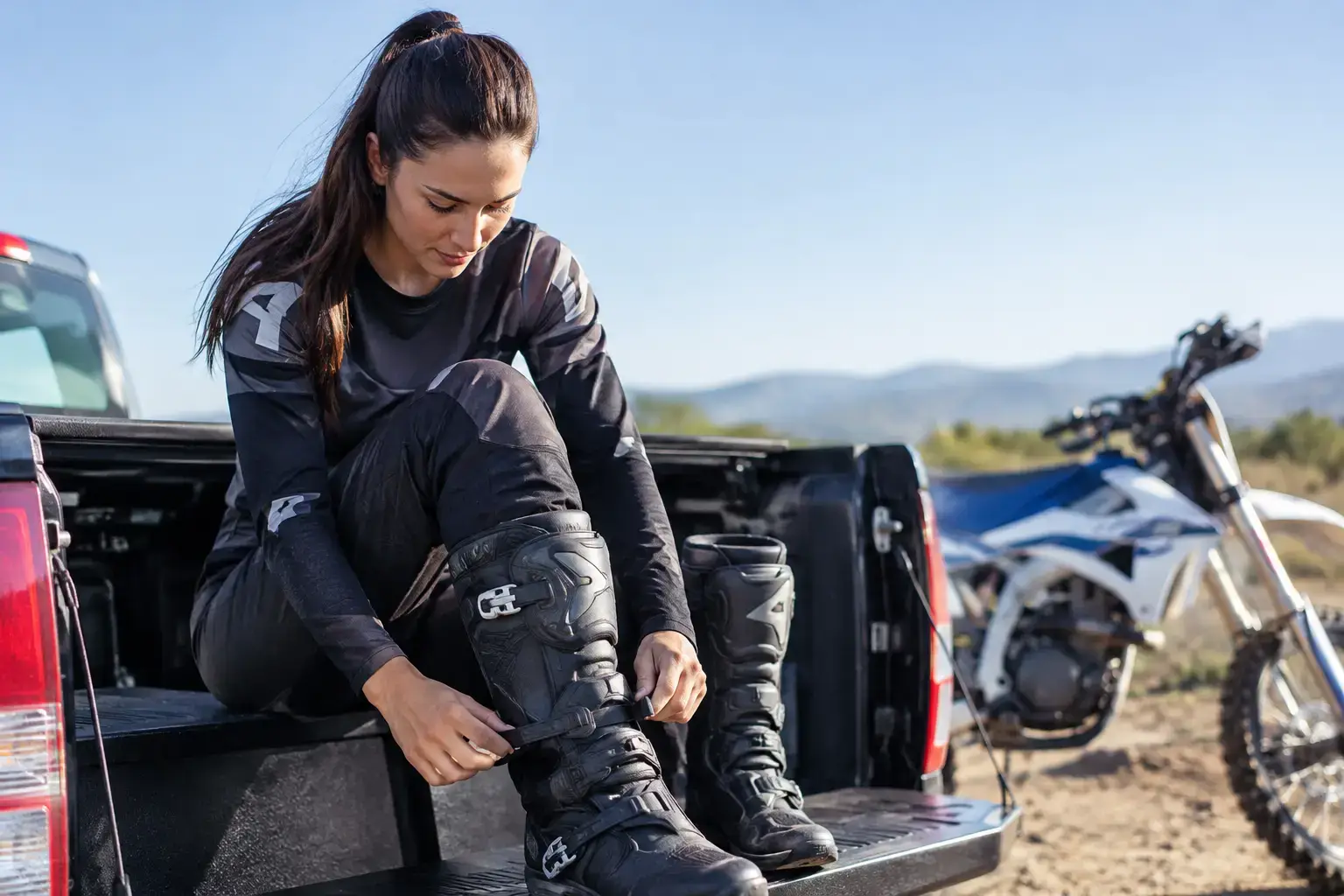
Motocross equipment is part of your safety system, not an afterthought. A properly fitted helmet, goggles, gloves, boots, jersey and pants, and protective gear help you stay focused when the riding gets physical. Boots are especially important because dirt bike foot pegs, shifting, braking, ruts, and unexpected dabs put stress on your feet and ankles.
Wear athletic layers that allow movement but do not leave loose material near controls. California track days can bring heat, dust, and changing conditions, so bring water and plan to hydrate before you feel drained. A tired rider makes slower decisions, grips the handlebars too tightly, and often starts making avoidable mistakes.
You should also arrive with the right mindset. Leave extra time for check-in, equipment fitting, bike orientation, and questions. Rushing into a session usually leads to skipped details, and those details matter when you are learning a new machine.
The First 20 Minutes Matter Most
Do not treat the opening laps as a warm-up you need to get through. Use them to establish control. Learn where the controls are, how the clutch engages, how much brake pressure the bike needs, and how the suspension reacts when you stand or sit.
Start with smooth acceleration and straight-line braking. Practice looking far ahead instead of down at the front fender. When riders look directly at a rut, a berm, or the edge of the track, they often steer toward it. Your eyes should lead the motorcycle toward the space where you want to go.
In corners, slow down early enough to enter with balance. Brake before the turn, not in a panic halfway through it. Keep your outside elbow up, weight the outside foot peg when appropriate, and turn your head toward the exit. These fundamentals may feel deliberate at first, but they are what make faster riding possible later.
Do not chase jumps before you own the basics
Track riding can make every jump look like the next thing to conquer. Resist that pressure. A rider who can brake consistently, corner on line, and carry a neutral body position will learn jumps with far less risk than someone who simply hits obstacles faster.
If you are instructed to stay on smaller features or avoid a section, follow that direction. Skill progression is earned through repetition, not impulse. The riders who improve fastest are usually the ones willing to slow down, make one correction, and repeat it until it feels natural.
Common Mistakes That Hold New Riders Back
The most common issue is riding stiff. New riders often lock their arms, sit too far back, and hold their breath when the track gets rough. That transfers every bump into the handlebars and makes the bike feel unpredictable. Keep a light grip, bend your knees, and let the motorcycle move beneath you.
Another mistake is treating the throttle like an on-off switch. A 125cc bike rewards smooth inputs. Roll on the power as the bike is pointed where you want to go, rather than snapping the throttle open while still leaned over or out of position.
Finally, do not measure your day by lap speed or how far someone else jumps. A good session might mean smoother starts, fewer stalls, better braking, or one corner you can repeat correctly. Those are real gains, and they build the confidence needed for bigger goals.
Turn One Rental Into Real Progress
Before you leave the track, think about what felt difficult and what improved. Maybe the clutch was easier than expected, but turning while standing felt awkward. Maybe you were comfortable on flat ground but needed help reading braking bumps. Specific observations give your next session direction.
A 125cc rental is more than a chance to try a faster dirt bike. Used the right way, it is a practical first step into motocross technique, track awareness, and responsible riding. Show up ready to learn, respect the process, and let solid fundamentals set the pace for everything that comes next.


Comments