

Bike Handling Skills That Make You Faster
The difference between a rider who looks tense and a rider who looks smooth is rarely horsepower. It is bike handling. When you can balance the bike, control traction, brake with purpose, and look where you want to go, the track becomes more predictable. You ride with less panic, use less energy, and make better decisions before a corner or obstacle forces one.
For new and developing dirt bike riders, handling is the skill that supports everything else. A bigger jump, faster straightaway, or more aggressive bike will not fix weak fundamentals. Build control first, then add speed when your body position, vision, and braking habits can support it.
What Good Bike Handling Actually Looks Like
Good handling is not about muscling the bike through every turn. It is the ability to keep the motorcycle settled while you react to changing traction, braking bumps, ruts, loose dirt, and uneven ground. Your inputs should be deliberate, not rushed.
On a dirt bike, the rider is a major part of the suspension system. If you are stiff on the bars, locked in your legs, or sitting too far back, the bike cannot move underneath you the way it needs to. That often leads to deflection, front-end washouts, arm pump, and the feeling that the bike is riding you.
A controlled rider stays active without becoming frantic. Your knees guide the bike, your feet stay connected to the pegs, and your hands remain light enough to feel what the front tire is doing. The goal is not to be completely motionless. The goal is to stay centered while allowing the bike to work.
Start With a Neutral Riding Position
Before working on corners or jumps, establish a strong standing position. Stand on the balls of your feet with your knees slightly bent and your hips over the footpegs. Keep your chest forward, elbows up and out, and your head in a position where you can see well ahead.
A common beginner mistake is standing tall with straight legs. This puts your weight too high and limits your ability to absorb bumps. Another is bending too far forward at the waist, which loads the handlebars and makes the front end feel nervous. Think of an athletic position: balanced, relaxed, and ready to move in any direction.
Grip the bike primarily with your legs, especially when accelerating through rough sections. You do not need to squeeze as hard as possible. Too much tension tires you out and restricts movement. Use enough pressure to keep the bike controlled, then let your arms stay flexible.
Your controls matter here too. Set your levers so you can cover the clutch and front brake without rolling your wrists into an awkward angle. If you have to reach for a lever, your reaction time slows down when the trail or track gets busy.
Use Vision to Improve Bike Handling
Riders often steer toward the obstacle they are staring at. That is why looking directly at a deep rut edge, a loose rock, or the outside of a turn can pull you toward it. Your eyes lead your body, and your body directs the bike.
Look ahead to the exit of the corner, the next braking zone, or the line you intend to ride. On a motocross track, this means scanning farther ahead than feels natural at first. Do not wait until you are entering a turn to decide where you want to go. Identify the entry, apex, and exit while you are still approaching it.
This does not mean ignoring hazards. Notice them, then move your focus to the available line. A rider who sees options stays calmer than a rider who only sees problems.
Brake Before the Turn, Not Through the Problem
Braking is one of the fastest ways to improve your riding, but it must be practiced with control. Many new riders either avoid the front brake because it feels intimidating or grab it suddenly when they are already entering a corner. Neither approach gives the front tire a fair chance to work.
Use both brakes, with the front brake doing most of the stopping on firm ground. Apply pressure progressively instead of snapping the lever. As the bike slows, weight transfers toward the front tire and increases available grip. If you grab too hard, especially on loose dirt or while leaned over, the tire can slide.
Do the major braking while the bike is upright. Enter the turn at a speed you can manage, release braking pressure smoothly, and then focus on balance and throttle through the corner. There are advanced situations where skilled riders trail brake deeper into a turn, but that is not the first habit to build. Start with clean separation: brake, turn, accelerate.
Practice stopping in a flat, open area. Pick a marker, accelerate moderately, and work on stopping with both brakes without locking either wheel. Repeat the drill at different speeds. You are training feel, not trying to create the shortest possible stopping distance on day one.
Corner With Your Lower Body
Corners expose weak habits quickly. If you enter too fast, stare at the front fender, sit back, and pull on the bars, the bike will feel heavy and unstable. A better approach begins before the turn with a controlled entry speed and a clear line choice.
For flatter turns, shift forward on the seat so you can weight the front tire. Put your outside foot firmly on the peg and point your inside leg forward, with the toe up and away from the ground. Keep pressure through the outside peg, lean the bike into the turn, and keep your upper body more upright than the bike.
Your throttle should be smooth. Chopping the throttle can unload the rear tire and upset the chassis. Opening it too aggressively can spin the rear tire and push the bike wide. Roll on power as the bike starts to stand up and the exit opens.
In a rut, let the rut guide the wheels instead of fighting it with abrupt steering. Enter with enough commitment to hold the line, look through the exit, and avoid putting all your weight on the inside leg. Deep ruts can feel intimidating, but they often offer more support than a flat, loose corner when ridden with proper body position.
Build Traction Awareness
Dirt changes constantly. A hard-packed turn can become slick after repeated laps. A sandy section may develop braking bumps. Morning moisture can create excellent grip that disappears as the day warms up. Strong riders read these changes and adjust instead of repeating the same inputs lap after lap.
Pay attention to how the rear tire reacts when you roll on the throttle. A small amount of controlled wheelspin may be normal in loose terrain. Excessive spin means you are likely using too much throttle, too little body position, or both. Move your weight as needed, stay connected through the pegs, and give the tire time to hook up.
The front tire gives feedback as well. If it feels vague in a turn, check your position before blaming the bike. Sitting too far back, entering with poor speed control, or pulling on the handlebars can all reduce front-end confidence. Suspension setup and tire condition matter, but technique should be the first checkpoint for most newer riders.
Practice One Skill at a Time
Trying to fix every part of your riding in one session usually creates overload. Choose one focus for several laps or a short practice block. You may work only on looking through turns, standing through rough ground, or applying the front brake smoothly.
Useful practice drills include repeating a simple flat corner at moderate speed, stopping at a consistent marker, standing through a straight section of small bumps, and riding figure eights in an open area. Keep the speed low enough that you can recognize what your body is doing. Quality repetitions beat a few fast laps with the same bad habit.
If you are renting a bike or returning to riding after time away, start with controls and balance before worrying about lap speed. Dirt Bike Rentals and Training sessions are designed to give riders that structured foundation in a real riding environment, with coaching that can identify the small habits holding back progress.
Know When to Slow Down
Confidence is valuable, but it should come from repeatable control. If your arms are pumped, you are missing braking points, or you are no longer looking ahead, take a break. Fatigue turns manageable sections into mistakes, especially for newer riders trying to keep up with faster friends.
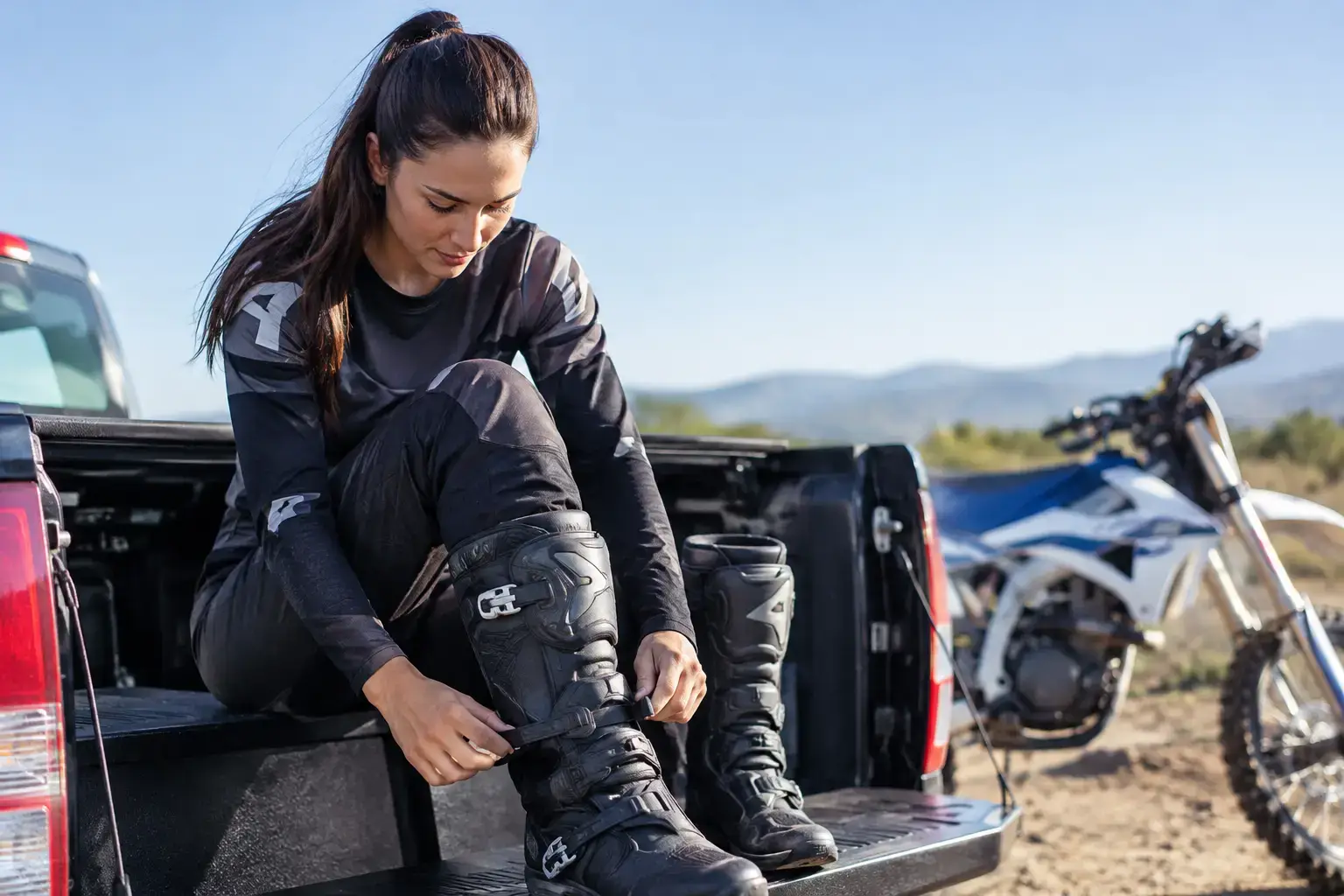
Wear the proper gear every time: a correctly fitted helmet, boots, gloves, eye protection, jersey and pants, and knee protection at minimum. Check your bike before riding. Confirm throttle return, brake function, tire condition, chain adjustment, controls, and fuel. These basics do not make riding less exciting. They give you a better chance to learn without avoidable interruptions.
Bike handling improves through focused seat time, not random aggression. Start at a pace where you can stay loose, see ahead, and repeat the right movement. When those fundamentals become automatic, speed has a safer place to come from.


Comments