

Motocross Lessons Versus Trail Riding for Beginners
A smooth dirt trail can make a first ride feel easy right up until the terrain changes. A motocross track can look intimidating before the engine even starts. That is why motocross lessons versus trail riding is not simply a choice between two places to ride. It is a decision about how you want to build control, confidence, and safe habits from day one.
Both can be valuable. Trail riding gives riders space to experience off-road terrain at a more natural pace. Motocross instruction puts a rider in a structured environment where braking, turning, body position, throttle control, and track awareness are taught with purpose. The best starting point depends on your goals, your current ability, and how much guidance you need.
Motocross Lessons Versus Trail Riding: The Main Difference
Trail riding is usually about covering terrain. You may ride through open desert, hills, hardpack, sand, ruts, rocky sections, or narrow paths. Every ride can be different, which is part of the appeal. The challenge is that the terrain can change quickly, and there is not always a predictable place to practice one skill repeatedly.
Motocross lessons are built around repetition and feedback. A track has defined turns, braking zones, jumps, rollers, and changing traction, but the layout stays consistent during a session. That consistency allows a trainer to watch what is happening, explain the correction, and give you another chance to apply it right away.
For a beginner, that difference matters. Trail riding may feel less formal, but it can ask for a lot of instinctive decision-making. A lesson slows the learning process down in the right way. You are not trying to figure out the controls, body position, and terrain all at once without direction.
What You Learn in a Motocross Lesson
A quality motocross lesson is not about sending big jumps on your first day. It starts with the fundamentals that make every type of dirt riding safer and more enjoyable. Riders learn how to stand in a balanced position, keep their eyes ahead, operate the clutch and throttle smoothly, and use both brakes with control.
Cornering is a major focus. New riders often enter turns too fast, look down at the ground, sit in the wrong position, or rely only on the rear brake. On a track, those habits become obvious. A trainer can help you establish a better approach: brake before the turn, choose a line, look through the exit, and roll on the throttle with control.
Track instruction also teaches discipline around other riders. You learn where to look, how to hold a predictable line, when to pass, and why stopping in blind areas creates risk. These are practical skills, especially for anyone planning to ride at organized motocross facilities.
At Dirt Bike Rentals and Training, instruction is led by Pro AMA racer Dominic DeSimone. That experience matters because good coaching is more than telling someone to go faster. It is knowing how to identify the small habits that hold a rider back and how to build skills in a progression that fits the rider.
The Track Is a Controlled Place to Make Mistakes
Every rider makes mistakes while learning. The goal is to make them at manageable speeds and in an environment where correction is possible. A motocross track gives you room to practice specific techniques without the surprises of an unfamiliar trail around the next corner.
That does not mean a track is risk-free. Dirt bikes demand attention, protective gear, and respect for your limits wherever you ride. But structured instruction helps reduce the common beginner errors that lead to panic, loss of balance, and poor decisions on the bike.
What Trail Riding Builds Well
Trail riding develops adaptability. The trail may be loose in one section, hard and dry in another, then steep, rocky, or sandy farther ahead. Riders learn to read terrain, manage traction, choose lines, and maintain momentum without overworking the bike.
It also teaches patience. On a technical climb or a tight single-track section, speed is rarely the answer. Smooth clutch work, controlled throttle input, balance, and good vision carry more value than aggression. Riders who want to explore off-road areas, desert routes, or wooded trails will eventually need these skills.
The downside for a new rider is that trail conditions can get difficult fast. A hidden rut, sharp downhill, deep sand, or off-camber turn may be manageable for an experienced rider but overwhelming for someone still learning basic braking and balance. Group trail rides can also create pressure to keep moving when a beginner needs time to reset.
Trail riding works best early on when the route matches the rider. Wide, open terrain with mild elevation changes is far more useful than being dropped into a technical ride because friends say it is “easy.” If you choose trails first, ride with people who will set a beginner-friendly pace and stop when you need coaching.
Which Option Is Better for First-Time Riders?
For most first-time riders, motocross lessons provide the stronger foundation. You get a predictable environment, direct feedback, and time to focus on the controls before adding the variables of changing terrain. This is especially true if you have never operated a manual-clutch dirt bike, are unsure what size bike fits you, or do not own your own equipment yet.
A lesson is also a practical way to find out whether dirt riding is right for you before making a major purchase. Renting a properly sized bike and receiving guidance can prevent the common mistake of buying too much bike too soon. Power is not the same as control. A smaller, manageable bike lets a new rider build confidence and technique faster.
Trail riding may be the better first choice for someone whose only goal is relaxed exploration, provided the terrain is truly beginner-friendly and an experienced rider is present to help. Still, even recreational trail riders benefit from a few hours of professional instruction. Proper body position and braking technique do not belong only on a motocross track.
Motocross Lessons Versus Trail Riding for Developing Riders
Once you can start, stop, shift, and turn comfortably, the decision becomes more goal-specific. If you want to improve lap speed, cornering, jumps, rhythm sections, or racing confidence, track instruction is the clear choice. Repeated laps show you exactly where your technique breaks down.
If your goal is longer off-road rides, trail riding should become a regular part of your development. You need experience with uneven ground, unpredictable traction, hills, and real-world route decisions. The key is not treating trails as a substitute for technique work. Riders often plateau because they repeat familiar routes without addressing weak fundamentals.
The strongest approach for many intermediate riders is a mix of both. Use motocross lessons to sharpen braking, turns, standing position, and throttle control. Use trail rides to apply those skills in changing conditions. Track practice builds precision. Trail time builds judgment.
Jumps Are Not the Starting Point
Jumps are what many people associate with motocross, but they should come after basic control. A rider needs to understand neutral body position, steady throttle, vision, and how the bike reacts over smaller obstacles before progressing to larger features.
Do not let social media clips set your pace. The rider clearing a jump smoothly has likely spent years building the skills that make it look simple. A professional trainer can help you progress through rollers, small tabletops, and track features at a speed that matches your ability.
Safety and Preparation Matter in Both
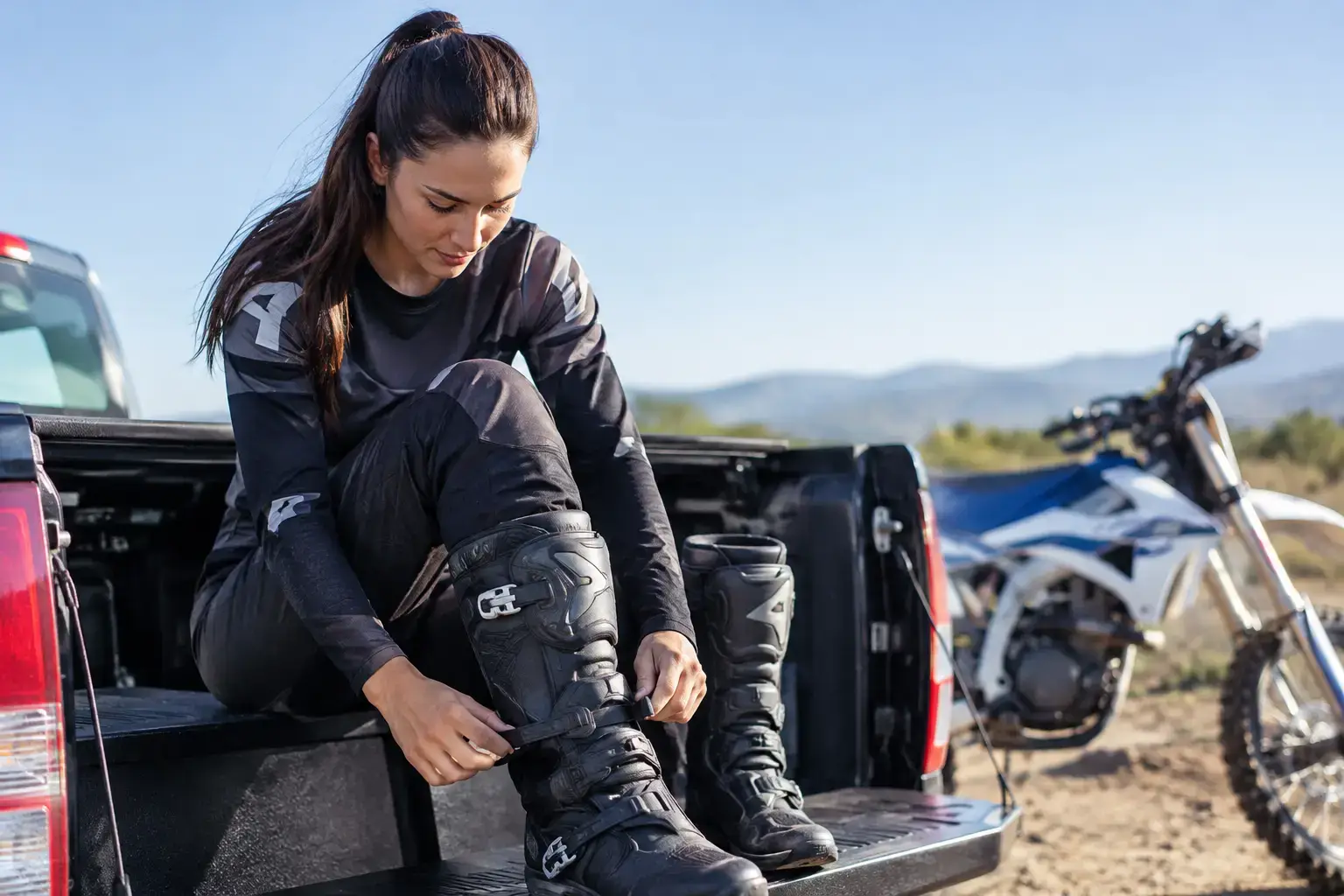
Whether you choose a lesson or a trail day, wear a properly fitted helmet, goggles, boots, gloves, and protective riding gear. Boots are particularly important. Dirt bike foot pegs, rocks, ruts, and falls can punish ankles and lower legs quickly.
Prepare your mindset, too. Tension makes the bike harder to control. New riders often grip the handlebars too tightly, sit too far back, and chop the throttle when they feel unsure. Start slowly, leave room to learn, and ask questions before frustration turns into bad habits.
For trail rides, check the route, weather, fuel range, riding rules, and who is coming with you. For motocross sessions, understand track etiquette and follow the trainer’s instructions. In either setting, stop when fatigue begins to affect your control. The last few laps or miles are not worth a preventable crash.
Choose the environment that fits your immediate goal, but do not box yourself into one style of riding. Start with the coaching and terrain that let you feel in control, then build outward. The rider who learns the fundamentals well can enjoy more trails, more tracks, and more time on the bike.


Comments