

Motocross Track Rules Every New Rider Should Know
The first lap at a motocross track can feel fast before you even twist the throttle. Bikes are moving, riders are choosing lines, and track staff are watching for safety issues. Knowing the track rules before you enter keeps you from becoming unpredictable to the riders around you. It also gives you more attention for the skills that matter: body position, braking, cornering, and building confidence one lap at a time.
For beginner and developing riders, rules are not there to make riding less fun. They create the order that lets riders of different ages, speeds, and experience levels share the same facility safely.
Track Rules Start at the Rider Meeting
Every riding facility has its own layout, policies, flag system, and procedures. The rider meeting, posted signs, and instructions from track staff always take priority over anything you learned at another track.
Before your session, confirm which track is assigned to your group, what direction it runs, where riders enter and exit, and which areas are off limits. Some facilities separate beginner, intermediate, and advanced groups. Others run open practice with designated sessions. Do not assume a track is open just because you see other bikes moving.
Ask questions before the gate drops. A quick question about staging, flag locations, or the exit lane is far better than stopping in the wrong place once the session starts. If you are training or renting a bike, make sure you understand the facility procedure as well as your instructor's plan for the day.
Know the Flags Before You Ride
Flags are one of the fastest ways track staff communicate with riders. You need to recognize them immediately, even when you are focused on a rut or approaching a jump.
A green flag generally means the track is clear for riding. A yellow flag means caution. Slow down, stay alert, and do not pass until you are clear of the hazard. There may be a downed rider, a stalled bike, track maintenance, or staff working near the course.
A red flag means stop riding safely and follow the direction of track staff. Do not keep circulating to finish your lap. A black flag is often used to bring a specific rider off the track, usually because of a mechanical issue, unsafe behavior, or a problem staff needs to address. A checkered flag signals the end of the session.
Flag colors and procedures can vary by facility, so learn the local system. The main principle does not change: track staff have a view of hazards that you may not be able to see from the bike.
Enter, Exit, and Rejoin Without Surprises
The entrance and exit lanes are not places to practice starts, test speed, or stop for a conversation. They exist to keep traffic predictable.
When entering the track, look for a safe gap and merge at a controlled pace. Faster riders may be approaching from behind or around a blind section. Do not shoot directly across the main line, especially near a jump face, berm, or corner exit. Build speed gradually and hold a predictable line until you are fully in the flow of traffic.
When leaving, signal your intention early by moving toward the designated exit route when it is safe. Reduce speed only after you are out of the main riding line. If you miss the exit, continue for another lap. Turning around or cutting across the track to reach the gate is never worth the risk.
The same rule applies after a tip-over. Get yourself out of harm's way first, then move the bike to a safe area if you can do so without crossing active traffic. Never stand on or near a jump landing to retrieve a bike.
Ride Your Line and Look Ahead
Motocross tracks work best when riders are predictable. You do not need to ride the fastest line, but you do need to avoid sudden changes that other riders cannot anticipate.
Choose a line before entering the corner and keep it through the turn. Avoid drifting from the inside to the outside halfway through a berm because you heard another rider coming. The rider behind should be responsible for making a safe pass, while you should keep your line and stay aware of your surroundings.
Looking ahead is part of track awareness. Your eyes should scan beyond the front fender to the next obstacle, the track surface, and riders ahead. When you stare at the rider directly in front of you, you lose time to react if they slow down, fall, or change direction.
For newer riders, this may mean backing off the pace when traffic feels crowded. There is no prize for trying to match a faster rider's speed before your fundamentals are ready. A controlled lap teaches more than a panicked one.
Passing Is a Responsibility, Not a Right
Faster riders will eventually catch slower riders. That is normal at practice tracks. The responsibility for a clean pass belongs primarily to the rider making the pass.
If you are being passed, stay calm, hold your line, and avoid abrupt moves. Do not speed up to block, cut toward the inside, or look over your shoulder through a corner. Let the faster rider find a safe opportunity. If the track is narrow or visibility is poor, it may take them a few turns to do it correctly.
If you are the faster rider, pass with room and patience. Do not force your front wheel into a corner where another rider has already committed to a line. Avoid aggressive passes near jump faces, landings, blind crests, and the track entrance or exit. Practice is where riders develop skills, not where they prove a point.
Jumps Require Extra Discipline
Jumps are where track rules and rider judgment matter most. Never stop on the face, crest, or landing of a jump. If you are unsure about an obstacle, roll it safely until you have the speed, position, and confidence to ride it correctly.
Do not follow another rider so closely that you cannot see the landing area. If they crash or lose momentum, you need enough time and space to react. This is especially important on tabletops, doubles, and sections where the next obstacle comes quickly.
Before attempting a jump for the first time, watch the line from a safe location if the facility allows it. Notice where riders brake, where they accelerate, and where they land. Then work up to the obstacle with coaching when possible. Technique instruction can help riders understand approach speed and body position without turning every lap into a guess.
Safety Gear and Bike Condition Are Part of the Rules
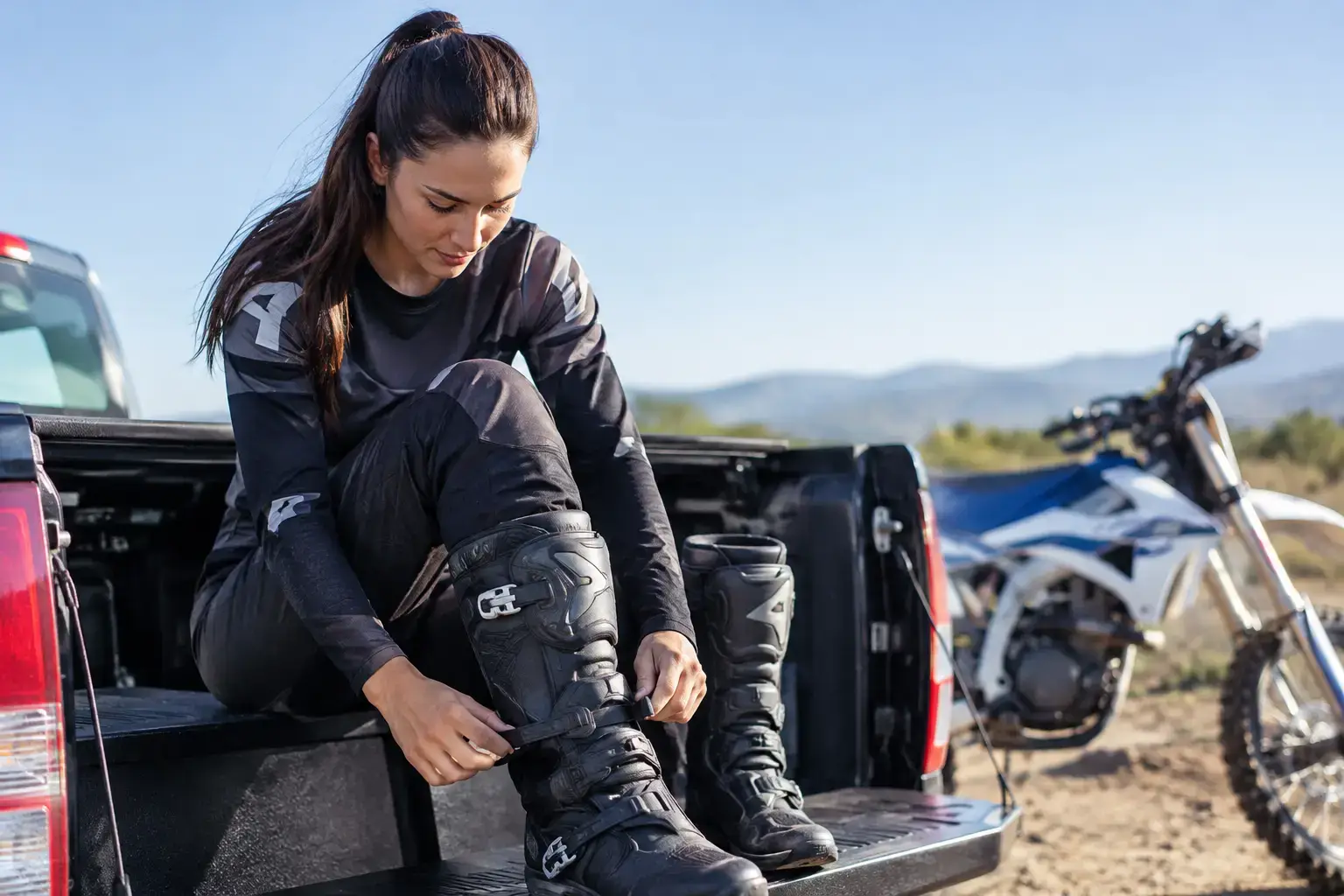
A helmet is only the starting point. Most tracks require protective gear, and riders should arrive with a properly fitting helmet, goggles, boots, gloves, long pants, and a jersey. Knee protection, chest protection, elbow guards, and a neck brace may also be appropriate depending on the rider and type of riding.
Your bike should be ready before it reaches the staging area. Check the throttle return, brakes, tires, chain, controls, fuel level, and any loose hardware. A throttle that sticks or a chain that is too loose can turn a simple practice session into a dangerous situation for everyone on track.
Rental riders should still take responsibility for a basic pre-ride check with their instructor. At Dirt Bike Rentals and Training, the goal is not just to put a rider on a bike. It is to help them understand how a prepared rider approaches the track.
Pit Etiquette Matters Too
The rules continue after the engine shuts off. Ride slowly in pit areas, keep children and spectators clear of moving bikes, and use designated parking and fueling areas. Do not rev engines near people, leave fuel containers unsecured, or work on a bike where it blocks access for others.
Hydration also belongs in your plan. Southern California heat, gear, and repeated practice laps can wear down focus quickly. Take a break before fatigue causes sloppy decisions. If your arms are pumped up, your vision is unfocused, or your judgment feels rushed, sit out a session and reset.
Build Good Habits From Your First Session
The best riders are not just fast. They are aware, disciplined, and easy to share a track with. Learn the local procedures, respect flags, ride a predictable line, and let your pace grow with your skill level.
A good practice day should leave you with more control than you had when you arrived. Follow the track rules, listen to qualified instruction, and give yourself the time to build habits that will still work when the track gets rough and the speed comes up.


Comments