

Track Training vs Trail Riding: Which Builds Skill?
A dirt bike can feel completely different when the ground changes beneath you. On a motocross track, the lines are visible, the obstacles repeat, and every lap gives you another chance to improve. On a trail, terrain changes without warning, traction varies, and good decisions matter as much as speed. That is why track training vs trail riding is not really about choosing one type of riding over another. It is about knowing what each environment teaches you.
For beginner and developing riders, track riding often provides the faster route to better fundamentals. Trail riding develops valuable judgment, endurance, and adaptability. The strongest riders borrow lessons from both, but they do not expect either environment to do the other’s job.
Track Training vs Trail Riding: The Main Difference
Track training is structured repetition. A motocross track gives you berms, braking bumps, turns, rollers, jumps, and ruts that appear lap after lap. That consistency lets a rider isolate a skill, make a correction, and immediately try again. If you are entering a corner too fast, sitting too early, or looking down at your front fender, a coach can spot it and help you fix it on the next lap.
Trail riding is less predictable. You may encounter loose rocks, sand, off-camber turns, narrow single-track, hills, roots, washouts, and changing visibility. The trail demands awareness and restraint. You cannot always repeat a section ten times, and you may not know what is around the next corner.
Neither is automatically harder. A beginner can feel intimidated by a track because other riders look fast and jumps are visible. Another rider may feel more comfortable on a trail until they realize there is no smooth, flat place to practice a turn or stop safely. The right choice depends on the rider’s current skills, goals, and access to instruction.
Why a Track Builds Fundamentals Faster
A good training track creates a controlled place to work on the skills that affect every type of dirt bike riding. Body position, throttle control, clutch use, braking technique, vision, balance, and cornering do not change just because you leave the track. They are the base of riding well anywhere.
The difference is that a track makes errors easier to identify. If you lose traction in the same flat corner every lap, there is a reason. Maybe you are braking too late. Maybe your elbows drop when you get tired. Maybe you are carrying your weight too far back. Repetition gives the rider and instructor useful information instead of guesses.
Track training also teaches riders to become deliberate. Rather than simply trying to make it through a ride, you can focus on one correction at a time. Ride a few laps with attention on standing position. Then work on smooth braking into turns. Then practice looking through the exit of the corner instead of staring at the rut. Those small adjustments add up quickly.
For a first-time rider, a track environment can also be easier to manage than an unfamiliar trail system. There are defined boundaries, a known direction of travel, and support nearby. A beginner does not need to prove anything by riding above their level. The goal is clean technique, controlled progress, and leaving with a clearer understanding of the bike.
Jumps Are Not the First Lesson
Many people associate motocross tracks with big jumps. That is only one part of the environment, and it should not be the focus for a new rider. A quality beginner session should prioritize braking, turning, standing, clutch control, and safe body position before airtime enters the conversation.
When a rider eventually approaches obstacles, the same fundamentals still apply. Proper approach speed, centered body position, eyes up, and predictable throttle control matter more than trying to look aggressive. A rider who can corner well and control the bike under braking is building the skills that make future jump instruction safer and more productive.
What Trail Riding Teaches That Tracks Cannot
Trail riding develops a different kind of confidence. On a trail, you learn to read terrain in real time and make decisions without a perfectly groomed line. You learn when to stand, when to sit, how to let the bike move beneath you, and when backing off the throttle is the smart call.
Trails also teach momentum management. A rocky climb may require steady throttle and commitment, while a tight downhill section may require smooth rear-brake control and patience. Sand can punish a rider who grips the bars too tightly. Loose descents can expose poor body position immediately. These conditions build practical off-road awareness.
There is also a mental side to trail riding. Riders need to watch for other users, changing trail conditions, blind corners, fatigue, and navigation concerns. A fast rider who lacks judgment can put themselves and others in a bad situation. Trail experience teaches respect for the environment and the limits of your equipment.
Still, trails can hide poor habits for a long time. A rider may survive a section using too much throttle, poor clutch control, or a weak standing position because the terrain forces the bike through. On a track, those habits are easier to see and correct. That is one reason structured coaching can be so valuable before tackling more demanding off-road terrain.
Which Is Better for Beginner Dirt Bike Riders?
For most beginners, track training is the better starting point when it includes proper instruction and manageable terrain. It gives riders a clear place to practice the basics without the added uncertainty of remote trails, unexpected obstacles, or difficult navigation.
That does not mean every beginner needs to become a motocross rider. It means they benefit from learning how to operate the bike correctly. A rider who understands neutral standing position, controlled braking, smooth throttle application, and basic cornering will have a safer starting point whether their long-term goal is motocross, desert riding, trail exploration, or casual family riding.
Trail riding can be an excellent next step once those basics start to feel natural. Start with terrain that matches your ability, ride with experienced people who respect your pace, and avoid treating every hill or technical section like a challenge you must conquer. Turning around is sometimes the most skilled decision available.
The Equipment Question Matters
The bike and protective gear should match the setting and the rider. A bike that is too tall, too powerful, or poorly maintained makes learning harder in either environment. Riders should be able to reach the controls confidently, operate the clutch and brakes without strain, and understand how the bike responds before adding speed or technical terrain.
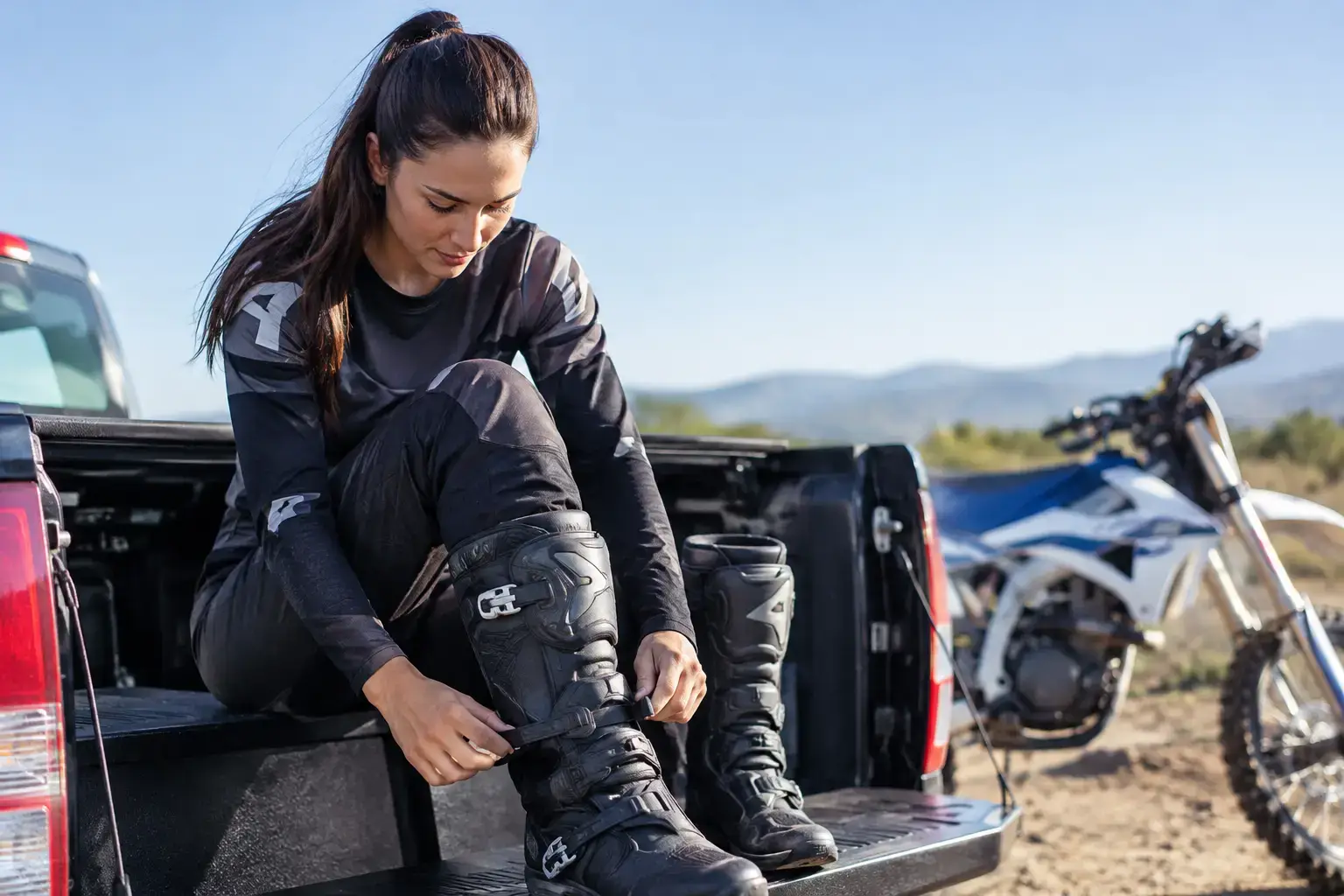
Protective equipment is not optional because you are riding slowly. A properly fitted helmet, goggles, boots, gloves, riding pants, jersey, and knee protection provide the baseline. Many riders also choose chest and elbow protection. The goal is not to feel invincible. It is to reduce avoidable risk while building skill with a clear head.
How Coaching Changes the Experience
Riding more does not automatically mean improving faster. Without feedback, riders often repeat the same mistakes until those mistakes become habits. A qualified instructor can see details that are hard to notice from the seat: a late brake application, stiff arms, poor foot position, hesitation on the throttle, or eyes focused too close to the front wheel.
At Dirt Bike Rentals and Training, Pro AMA racer Dominic DeSimone brings that performance-based perspective to beginner-focused instruction. The value is not just being told to go faster. It is learning what to do with your body, controls, and attention so the bike becomes more predictable.
That type of coaching translates well beyond the track. Better braking helps on a steep trail. Strong standing position helps in rocks and sand. Looking ahead helps everywhere. The rider who builds fundamentals in a controlled setting usually has more options when terrain gets rough.
A Smart Way to Use Both Environments
If you have access to both tracks and trails, use them with purpose. Spend track time developing one or two technical skills at a time. Then use easier trail rides to apply those skills in changing terrain. If a trail exposes a weakness, such as trouble with tight turns or downhill braking, bring that issue back to a controlled training session.
Avoid measuring progress only by speed, jump size, or how difficult a trail you completed. Better indicators include smoother starts, fewer stalls, calmer braking, stronger body position when tired, and better choices when conditions become uncertain. Those are the skills that keep riding fun long after the novelty wears off.
Your next ride does not need to be the most demanding one. Choose the environment that gives you the clearest chance to practice well, stay within your limits, and finish wanting to improve one more time.


Comments